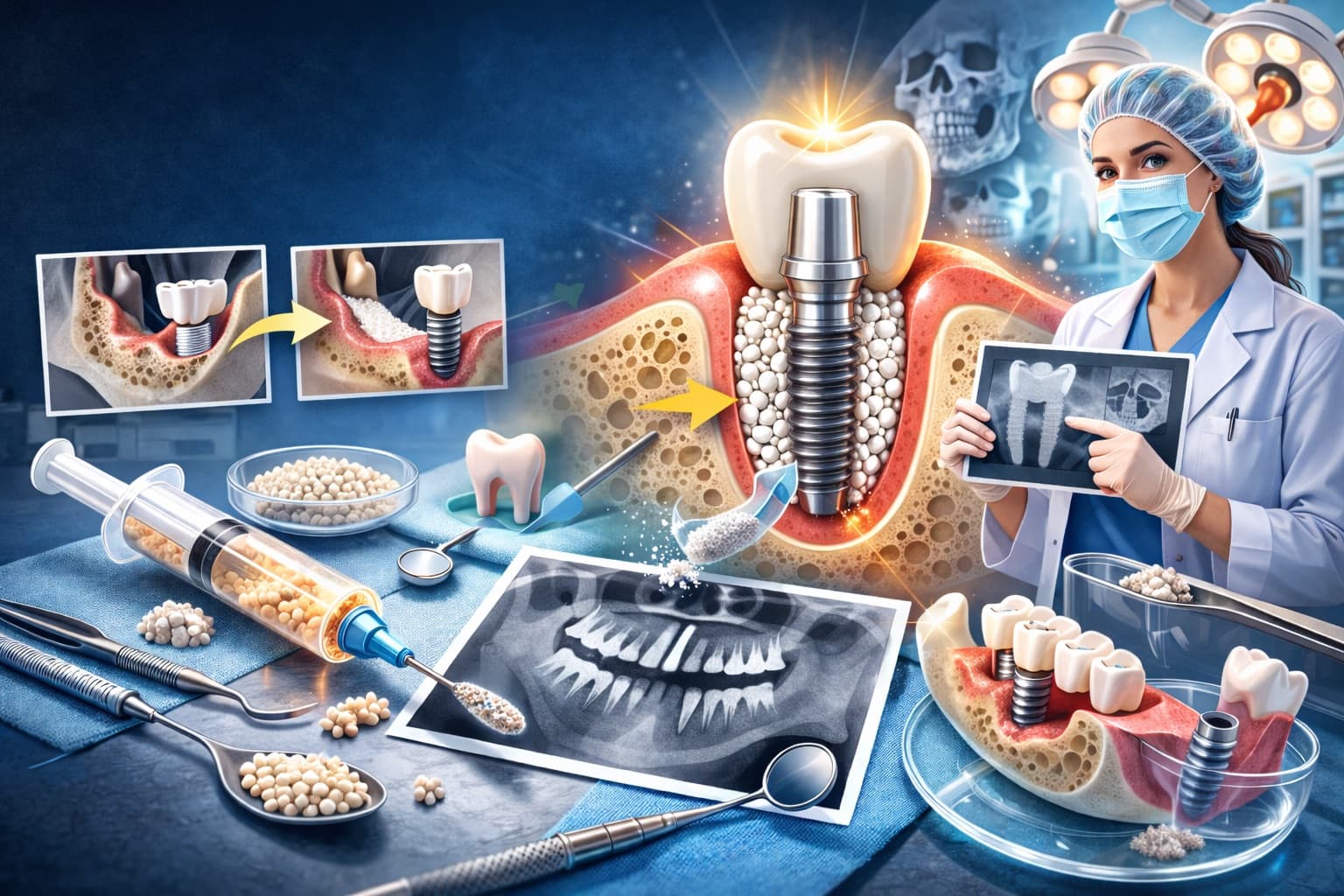
Signs and Symptoms That Indicate You Might Need a Bone Graft
One of the most common questions international patients ask is: "How do I know if I need a bone graft?" The answer isn't always straightforward, as bone loss in the jaw can develop gradually and sometimes without obvious symptoms. However, there are several telltale signs that may indicate insufficient bone density or volume for successful dental implant placement.
Previous Tooth Loss and Extended Edentulism
The most significant indicator that you might need a bone graft is a history of tooth loss, particularly if teeth have been missing for an extended period. When you lose a tooth, the jawbone that once supported it no longer receives the stimulation it needs from chewing forces. This lack of stimulation triggers a natural process called bone resorption, where the body gradually breaks down and reabsorbs the bone tissue.
This process begins almost immediately after tooth loss and continues progressively over time. In the first year after losing a tooth, you can lose up to 25% of the bone width in that area. Over the following years, this bone loss continues, though at a slower rate. If you've been missing teeth for several years—or even decades—there's a strong likelihood that significant bone resorption has occurred.
Many patients don't realize the extent of their bone loss until they consult with a dental specialist about implants. You might notice that the ridge where your teeth once were has become noticeably flatter or narrower over time. This visible change in your jaw's contour is often a clear sign that bone volume has diminished.
Problems with Dentures or Partial Dentures
If you currently wear dentures or partial dentures and have noticed increasing difficulty with fit and stability, this could be a strong indicator of ongoing bone loss. Dentures rely on the underlying bone and gum tissue for support and retention. As the bone continues to resorb beneath dentures, the fit becomes progressively looser.
Common complaints that suggest bone loss include:
- Dentures that slip or move when eating or speaking
- The need for increasingly frequent denture adjustments or relines
- Difficulty keeping dentures in place even with adhesives
- Sore spots or irritation that develop more frequently
- A change in your facial appearance, with lips appearing to sink inward
- Difficulty chewing certain foods that were previously manageable
These issues occur because the foundation supporting your dentures is literally shrinking away. Many patients who have worn dentures for years find that what once fit comfortably now feels unstable and uncomfortable. This progressive instability is often what prompts patients to explore dental implants as a more permanent solution—and it's at this point that the need for bone grafting may be identified.
Gum Disease and Periodontal Issues
Advanced gum disease, or periodontitis, is another major cause of bone loss that may necessitate bone grafting before implant placement. Unlike bone loss from missing teeth, periodontal bone loss occurs while teeth are still present, caused by bacterial infection and inflammation of the tissues supporting the teeth.
If you've been diagnosed with periodontal disease or have experienced any of the following symptoms, there's a possibility that bone loss has occurred:
- Gums that bleed easily during brushing or flossing
- Persistent bad breath or bad taste in your mouth
- Gums that have receded, making teeth appear longer
- Teeth that feel loose or have shifted position
- Changes in your bite or the way your teeth fit together
- Pus between teeth and gums
- Deep pockets between teeth and gums (measured by your dentist)
Periodontal disease destroys the bone that anchors teeth in place. In severe cases, this bone loss can be extensive, affecting not just individual teeth but large sections of the jaw. Even after periodontal treatment and tooth extraction, the damaged bone may not provide adequate support for dental implants without grafting.
Facial Changes and Aesthetic Concerns
Bone loss in the jaw doesn't just affect dental function—it can also cause noticeable changes in facial appearance. The jawbone provides crucial structural support for facial tissues, and when this support diminishes, aesthetic changes follow.
You might need a bone graft if you've noticed:
- A collapsed or sunken appearance in areas where teeth are missing
- Premature aging of the lower face, with more pronounced wrinkles around the mouth
- A shortened distance between your nose and chin
- Lips that appear thinner or lack support
- Jowls or sagging in the lower face
- An overall "caved-in" facial profile
These changes occur because the bone provides the scaffolding that maintains facial contours. When bone volume decreases, the soft tissues above it lose support and begin to sag. This is particularly noticeable in patients who have been edentulous (without teeth) for many years or who have lost multiple teeth in the aesthetic zone (the front of the mouth).
For patients considering treatment in Turkey, these aesthetic concerns are often just as important as functional ones. Modern bone grafting techniques can restore not only the foundation needed for implants but also help rejuvenate facial appearance by rebuilding the underlying bone structure.
Previous Failed Implants or Complications
If you've previously had dental implants placed that failed or experienced complications, insufficient bone may have been a contributing factor. Implant failure can occur for various reasons, but inadequate bone quantity or quality is among the most common.
Signs that previous implant issues might indicate a need for bone grafting include:
- Implants that became loose or mobile
- Implants that never properly integrated with the bone
- Chronic infection or inflammation around previous implant sites
- Implants that were placed but felt unstable from the beginning
- Being told by a previous dentist that you "don't have enough bone" for implants
When implants fail due to insufficient bone, the failure itself can cause additional bone loss, creating a more challenging situation for future treatment. Bone grafting can address these deficiencies and provide a more stable foundation for replacement implants.
Trauma or Injury to the Jaw
Physical trauma to the face or jaw—whether from accidents, sports injuries, or other incidents—can result in bone loss or damage that requires grafting. Even injuries that occurred years ago can have lasting effects on bone structure.
If you've experienced facial trauma and are now considering dental implants, bone grafting may be necessary if:
- The injury resulted in tooth loss
- Fractures affected the jawbone
- Scar tissue has formed in the bone
- The bone healed in an irregular or compromised position
- There's visible deformity or asymmetry in the jaw
Trauma-related bone loss can be particularly complex because it may involve not just volume loss but also structural irregularities that need to be corrected before implant placement.
Congenital Conditions or Developmental Issues
Some patients have insufficient bone due to congenital conditions or developmental abnormalities rather than acquired bone loss. These might include:
- Naturally thin or narrow jawbones
- Cleft palate or other craniofacial conditions
- Developmental defects in the jaw
- Genetic conditions affecting bone density
If you've always had dental challenges related to jaw structure or have been told you have unusually small or narrow jaws, bone grafting might be necessary to create adequate space and support for dental implants.
Sinus Proximity in the Upper Jaw
For patients considering implants in the upper back jaw (posterior maxilla), the position of the maxillary sinuses can be a determining factor in whether bone grafting is needed. The sinuses are air-filled cavities in the skull, and in many people, they extend quite low into the upper jaw, leaving insufficient bone height for standard implant placement.
You might need a sinus lift (a specific type of bone graft) if:
- You've lost upper back teeth and the sinus has expanded into that space
- X-rays show minimal bone height between the sinus floor and the ridge crest
- You've been told you need implants in the upper back jaw area
This is an extremely common scenario, and sinus lift procedures are routinely performed in Turkish dental clinics with high success rates.
How Dentists Diagnose the Need for a Bone Graft
Understanding whether you need a bone graft isn't something you can determine on your own—it requires professional assessment using advanced diagnostic tools and clinical expertise. When you consult with a dental clinic in Turkey (or anywhere else), the diagnostic process typically involves several steps designed to evaluate your bone quantity, quality, and suitability for implant placement.
The Initial Clinical Examination
Your diagnostic journey begins with a thorough clinical examination. During this appointment, your dentist will:
Conduct a visual and tactile assessment of your mouth, examining the areas where teeth are missing or where implants are planned. They'll look at the width and height of the alveolar ridge (the bone that supports teeth), assess gum tissue health, and evaluate the overall condition of your oral cavity.
Review your dental and medical history in detail. This includes understanding when and why you lost teeth, any history of gum disease, previous dental treatments, medications you're taking, and medical conditions that might affect bone healing (such as osteoporosis, diabetes, or autoimmune disorders).
Perform manual palpation of the jaw to assess bone contours and identify areas where bone may be deficient. Experienced clinicians can often detect significant bone loss through careful examination, though imaging is always necessary for precise measurement.
Evaluate your bite and jaw relationship, checking how your upper and lower jaws align and whether there are any functional issues that might complicate treatment planning.
This initial examination provides valuable preliminary information, but the definitive assessment of bone adequacy requires advanced imaging.
Panoramic X-Rays: The First Imaging Step
Most diagnostic processes begin with a panoramic X-ray (also called an orthopantomogram or OPG). This is a two-dimensional image that captures your entire jaw, all teeth, sinuses, and surrounding structures in a single image.
Panoramic X-rays are useful for:
- Getting an overview of your dental and bone structure
- Identifying obvious areas of bone loss
- Detecting pathology such as cysts, infections, or other abnormalities
- Assessing the general position of nerves and sinuses
- Providing a baseline for treatment planning
However, panoramic X-rays have limitations. They provide only a two-dimensional view, which means they can't accurately measure bone width or show the precise three-dimensional anatomy. They're excellent for screening and initial assessment, but for implant planning—especially when bone grafting might be needed—more detailed imaging is essential.
Cone Beam Computed Tomography (CBCT): The Gold Standard
The most important diagnostic tool for assessing bone adequacy is Cone Beam Computed Tomography, commonly known as CBCT or dental CT scanning. This technology has revolutionized implant dentistry and bone graft planning, and virtually all reputable dental clinics in Turkey are equipped with CBCT scanners.
What CBCT provides:
CBCT creates a three-dimensional image of your jaw, teeth, and surrounding structures with remarkable detail. Unlike traditional X-rays, CBCT allows your dentist to:
- Measure bone height with millimeter precision
- Assess bone width at any point along the jaw
- Evaluate bone density and quality
- Visualize the exact position of critical structures like nerves and sinuses
- Identify bone defects, voids, or irregularities
- Plan implant placement virtually before any surgery occurs
How CBCT scanning works:
The procedure is quick and non-invasive. You'll sit or stand while the scanner rotates around your head, typically taking 10-40 seconds to capture the necessary images. The radiation exposure is significantly lower than medical CT scans, though higher than traditional dental X-rays. The benefits for treatment planning far outweigh the minimal radiation risk.
What dentists look for in CBCT scans:
When evaluating CBCT images to determine if bone grafting is needed, dentists assess several critical factors:
Bone height: For standard dental implants, there needs to be adequate vertical bone. Most implants require at least 10mm of bone height, though shorter implants (6-8mm) are available for cases with moderate bone loss. If bone height is insufficient, vertical bone grafting or sinus lift procedures may be necessary.
Bone width: The jaw ridge must be wide enough to accommodate the implant diameter with adequate bone surrounding it on all sides. Most implants require at least 6-7mm of bone width. If the ridge is too narrow, horizontal bone grafting (ridge augmentation) may be needed.
Bone density: CBCT scans can assess bone quality, typically classified on a scale from D1 (very dense) to D4 (very soft). Denser bone provides better implant stability, while very soft bone may require grafting with denser bone material or modified surgical techniques.
Anatomical limitations: The scans reveal the position of the maxillary sinuses in the upper jaw and the inferior alveolar nerve in the lower jaw. If these structures are too close to the planned implant site, bone grafting may be necessary to create safe clearance.
Bone defects: CBCT imaging can identify specific defects such as fenestrations (holes in the bone), dehiscences (bone that doesn't cover the root surface), or irregular bone contours that would compromise implant placement.
Digital Treatment Planning and Virtual Implant Placement
Many advanced clinics in Turkey use specialized software to analyze CBCT scans and create detailed treatment plans. This technology allows dentists to:
- Virtually place implants in the ideal position before surgery
- Measure available bone with precision
- Identify exactly where and how much bone grafting is needed
- Create surgical guides for precise implant placement
- Show patients visual representations of their treatment plan
This digital planning is particularly valuable for international patients because it allows for detailed discussion and planning before you travel. Many Turkish clinics will request that you send CBCT scans taken in your home country, or they'll arrange for scanning during your first visit, allowing them to create a comprehensive treatment plan and provide accurate cost estimates.
Bone Quality Assessment
Beyond quantity, bone quality is crucial for implant success. Dentists assess bone quality through:
Visual assessment on CBCT: Dense bone appears whiter on scans, while less dense bone appears grayer. This gives a general indication of bone quality.
Tactile assessment during surgery: The ultimate test of bone quality occurs during implant placement, when the surgeon can feel the resistance and density of the bone. However, CBCT provides valuable predictive information.
Bone density measurements: Some advanced software can provide numerical density measurements (in Hounsfield units) that help predict implant success and determine if grafting with denser material would be beneficial.
Periodontal Probing and Soft Tissue Assessment
For patients with remaining teeth, periodontal probing is essential. Your dentist will use a small measuring instrument to check the depth of pockets around teeth and assess attachment levels. Deep pockets and attachment loss indicate periodontal disease and associated bone loss.
Soft tissue assessment is also important because adequate gum tissue is needed around implants. If bone grafting is required, soft tissue grafting might also be necessary to ensure optimal aesthetic and functional outcomes.
Medical Evaluation and Risk Assessment
Determining whether you need a bone graft isn't just about bone quantity—it's also about whether you're a good candidate for the procedure. Your dentist will evaluate:
Medical conditions that affect bone healing, such as uncontrolled diabetes, osteoporosis, autoimmune disorders, or bleeding disorders.
Medications that might impact bone grafting success, including bisphosphonates (used for osteoporosis), immunosuppressants, or anticoagulants.
Lifestyle factors such as smoking, which significantly impairs bone healing and graft integration.
Age and overall health, as these factors influence healing capacity and surgical risk.
For international patients traveling to Turkey, this medical evaluation is typically conducted through detailed questionnaires and, when necessary, consultation with your home physician or medical records review.
The Diagnostic Consultation: Putting It All Together
After gathering all diagnostic information, your dentist will present a comprehensive treatment plan that addresses:
- Whether bone grafting is necessary and, if so, what type
- The extent of grafting required (minor augmentation vs. major reconstruction)
- The timeline for treatment, including healing periods
- Alternative options if you prefer to avoid grafting
- Expected outcomes and success rates
- Costs and payment options
Reputable Turkish dental clinics are transparent about the need for bone grafting. They understand that international patients need clear, honest assessments to plan their travel and budget appropriately. Be wary of clinics that promise implants without proper diagnostic imaging or that seem to minimize the need for grafting when other professionals have recommended it.
Remote Consultation and Pre-Travel Planning
One advantage of modern dental tourism is the ability to begin the diagnostic process before traveling. Many Turkish clinics offer:
Virtual consultations where you can discuss your case via video call
Remote treatment planning based on CBCT scans and X-rays taken in your home country
Detailed treatment proposals including timelines, procedures needed, and costs
Second opinions on treatment plans proposed by other dentists
This remote planning is particularly valuable for bone grafting cases because it allows you to understand the full scope of treatment before committing to travel. You'll know whether you need grafting, how long you'll need to stay in Turkey, and whether multiple visits will be necessary.
Success Rates and What to Expect After Treatment
Understanding the success rates of bone grafting procedures and knowing what to expect during recovery is essential for setting realistic expectations and planning your dental tourism journey to Turkey. Bone grafting is a well-established, highly successful procedure, but it requires time, proper healing, and patient compliance to achieve optimal results.
Success Rates: What the Evidence Shows
Bone grafting for dental implants has been extensively studied, and the research consistently demonstrates high success rates when procedures are performed by experienced surgeons using appropriate techniques and materials.
Overall success rates for bone grafting procedures typically range from 85% to 95%, depending on the type of graft, location, and patient factors. These figures represent successful bone integration and adequate bone formation to support dental implant placement.
Specific procedure success rates:
Minor ridge augmentation (small bone grafts placed at the time of implant placement) has success rates exceeding 95%. These procedures involve minimal additional bone and are highly predictable.
Sinus lift procedures show success rates of 90-95% when performed by experienced surgeons. Studies have demonstrated that implants placed in grafted sinus areas have survival rates comparable to implants placed in native bone.
Major ridge augmentation (significant horizontal or vertical bone grafting) has slightly lower but still impressive success rates of 85-92%. These more complex procedures require longer healing times but can successfully reconstruct severely deficient ridges.
Socket preservation grafts (bone grafting immediately after tooth extraction) are highly successful, with studies showing they effectively maintain bone volume and significantly improve conditions for future implant placement.
Implant success in grafted bone is the ultimate measure of bone grafting success. Research shows that implants placed in grafted bone have survival rates of 90-95% over 5-10 years, which is comparable to implants placed in native bone. This demonstrates that properly executed bone grafting creates a foundation that functions as well as natural bone.
Factors That Influence Success
While overall success rates are high, several factors influence individual outcomes:
Surgeon experience and technique: Bone grafting is technique-sensitive. Experienced surgeons who perform these procedures regularly achieve better outcomes. Turkish dental clinics that specialize in implantology and treat high volumes of international patients typically have extensive experience with bone grafting procedures.
Graft material selection: Different bone graft materials have varying success rates. Autogenous bone (from the patient's own body) has historically been considered the gold standard, but modern synthetic and xenograft materials have shown comparable success rates with less surgical morbidity.
Patient health and healing capacity: Patients in good general health with no smoking history and well-controlled medical conditions heal more predictably. Conditions like uncontrolled diabetes, osteoporosis, or autoimmune disorders can compromise healing.
Smoking: This deserves special emphasis. Smoking significantly impairs bone healing and graft integration. Studies show that smokers have failure rates 2-3 times higher than non-smokers. Most Turkish dental clinics will strongly advise smoking cessation before and after bone grafting procedures.
Infection prevention: Proper surgical technique, sterile conditions, and appropriate antibiotic protocols minimize infection risk, which is one of the primary causes of graft failure.
Patient compliance: Following post-operative instructions, maintaining excellent oral hygiene, attending follow-up appointments, and avoiding premature loading of the graft site are crucial for success.
The Healing Timeline: What to Expect
Understanding the healing timeline is particularly important for international patients planning treatment in Turkey, as it affects travel planning and the number of visits required.
Immediate post-operative period (Days 1-7):
The first week after bone grafting involves managing normal post-surgical symptoms:
- Swelling: Expect moderate to significant swelling, typically peaking around day 3-4 and gradually subsiding over the following week. Swelling is a normal part of healing and doesn't indicate complications.
- Discomfort: Most patients experience mild to moderate discomfort, well-managed with prescribed pain medications. Pain typically decreases significantly after the first 3-4 days.
- Bruising: Some bruising of the face and jaw is common, particularly with larger grafting procedures. This typically resolves within 7-10 days.
- Dietary restrictions: You'll need to follow a soft food diet, avoiding chewing in the grafted area. Most clinics recommend soft, cool foods for the first week.
- Activity limitations: Avoid strenuous exercise, heavy lifting, and activities that increase blood pressure for at least one week.
During this period, you'll typically have a follow-up appointment to check healing and remove any non-resorbable sutures (usually around day 7-10). Many international patients plan to stay in Turkey for 7-10 days after bone grafting to ensure proper initial healing and attend this follow-up.
Early healing phase (Weeks 2-4):
- Swelling and discomfort continue to decrease
- You can gradually expand your diet, though still avoiding hard or crunchy foods in the grafted area
- The surgical site begins to close and epithelialize (develop new surface tissue)
- You can typically resume normal daily activities, though still avoiding vigorous exercise
Intermediate healing phase (Months 1-3):
- The graft material begins integrating with your existing bone
- New blood vessels grow into the graft (revascularization)
- Bone cells from your body begin colonizing the graft material
- The site continues to mature and strengthen
- You can typically resume all normal activities, including exercise
Bone maturation phase (Months 3-6):
- The graft material continues to be remodeled and replaced by your own bone
- Bone density increases as the graft fully integrates
- By 4-6 months, most grafts have achieved sufficient maturity for implant placement
The critical waiting period:
The most common question international patients ask is: "How long until I can get my implants?" The answer depends on the extent of grafting:
- Minor grafts (small augmentations done simultaneously with implant placement): No additional waiting time—implants are placed immediately.
- Moderate grafts (sinus lifts, modest ridge augmentation): Typically 4-6 months of healing before implant placement.
- Major grafts (extensive ridge reconstruction, large vertical grafts): May require 6-9 months of healing before implant placement.
This healing period is non-negotiable. Attempting to place implants before the graft has adequately matured significantly increases failure risk. Reputable Turkish clinics will not compromise on healing time, even if it means additional travel for international patients.
Planning Multiple Visits to Turkey
For international patients requiring bone grafting, treatment typically involves multiple visits:
Visit 1 (Bone grafting procedure):
Duration: 7-10 days in Turkey
Includes: Initial consultation, CBCT scanning, bone grafting surgery, initial healing period, suture removal, and post-operative check
Healing period at home:
Duration: 4-9 months depending on graft extent
Includes: Regular check-ins with your Turkish clinic (via photos, video calls, or local dentist reports)
Visit 2 (Implant placement):
Duration: 7-10 days in Turkey
Includes: Evaluation of graft healing, implant placement surgery, initial healing period, post-operative check
Healing period at home:
Duration: 3-6 months for implant osseointegration
Visit 3 (Final restoration):
Duration: 5-7 days in Turkey
Includes: Implant uncovering (if needed), impressions, crown/bridge fabrication and placement
Some clinics offer "all-inclusive" packages that bundle multiple visits, while others price each visit separately. Understanding this timeline helps you plan travel, time off work, and budget appropriately.
What Successful Healing Looks Like
Knowing what successful healing looks like helps you monitor your progress and identify any concerns:
Normal healing signs:
- Gradual reduction in swelling and discomfort
- Surgical site that appears pink and healthy
- Sutures that remain intact until removal
- Absence of persistent pain after the first week
- No unusual discharge or odor
- Ability to gradually expand your diet
- Feeling of stability in the grafted area
When to contact your dentist:
While complications are uncommon, certain signs warrant immediate contact with your Turkish clinic:
- Increasing pain after the first few days
- Severe swelling that worsens rather than improves
- Fever above 38°C (100.4°F)
- Persistent bleeding
- Foul odor or taste
- Pus or unusual discharge
- Graft material becoming exposed or extruding
- Sutures that come loose prematurely
Reputable Turkish clinics provide 24/7 emergency contact information for international patients and will guide you through any concerns, arranging local care if necessary or advising whether you need to return to Turkey.
Long-Term Outcomes and Maintenance
Once your bone graft has fully healed and integrated, and implants have been successfully placed, long-term success depends on proper maintenance:
Excellent oral hygiene: Brush twice daily, floss daily, and use any recommended adjunctive cleaning aids. Implants in grafted bone require the same meticulous care as implants in native bone.
Regular professional cleanings: Most dentists recommend professional cleanings every 3-6 months for implant patients. You can have these done locally, with periodic check-ins with your Turkish clinic.
Avoid smoking: Smoking not only compromises initial healing but also increases long-term implant failure risk. Patients who quit smoking have significantly better long-term outcomes.
Manage systemic health: Control conditions like diabetes, maintain good nutrition, and address any health issues that could affect bone and implant health.
Protect against trauma: If you grind your teeth, wear a nightguard. Avoid using your teeth as tools or chewing extremely hard objects.
Regular monitoring: Annual X-rays help detect any bone loss or implant issues early, when they're most treatable.
Realistic Expectations: The Bottom Line
Bone grafting is a highly successful procedure that enables thousands of patients to receive dental implants who otherwise couldn't. However, it's important to maintain realistic expectations:
Success is highly probable but not guaranteed. With proper patient selection, experienced surgeons, and patient compliance, success rates exceed 90%, but no surgical procedure has a 100% success rate.
Healing takes time. Bone grafting adds months to your treatment timeline. Patients seeking "quick" solutions may be disappointed, but this time investment is necessary for long-term success.
Some discomfort is normal. While manageable, bone grafting is a surgical procedure that involves a recovery period. Most patients find it less uncomfortable than anticipated, but it's not entirely without discomfort.
The investment is worthwhile. Patients who complete bone grafting and implant treatment consistently report high satisfaction, improved quality of life, and appreciation for the restored function and aesthetics.
Turkish clinics deliver excellent outcomes. When you choose an experienced, reputable clinic in Turkey, you can expect success rates comparable to or exceeding those in Western countries, at a fraction of the cost.
Why Turkey is an Ideal Destination for Bone Graft Procedures
Turkey has established itself as a global leader in dental tourism, and bone grafting procedures are among the many treatments that attract international patients. Several factors make Turkey particularly well-suited for these complex procedures.
Expertise and specialization: Turkish dental surgeons who focus on implantology and bone grafting perform these procedures with remarkable frequency—often treating more patients in a month than many Western dentists treat in a year. This high volume translates to refined skills and extensive experience with diverse cases, including complex bone reconstructions.
Advanced technology: Leading Turkish dental clinics invest heavily in state-of-the-art equipment, including CBCT scanners, digital treatment planning software, piezoelectric bone surgery devices, and advanced grafting materials. The technology available in top Turkish clinics matches or exceeds what you'll find in Western Europe or North America.
Cost advantages: Perhaps the most compelling reason international patients choose Turkey is cost. Bone grafting procedures in Turkey typically cost 50-70% less than in the UK, Western Europe, or North America, even when factoring in travel expenses. This significant savings makes treatment accessible to patients who might not otherwise be able to afford it.
Comprehensive care packages: Many Turkish clinics offer all-inclusive packages that bundle bone grafting, implants, restorations, accommodation, and airport transfers. This comprehensive approach simplifies planning for international patients and ensures continuity of care.
Medical tourism infrastructure: Turkey has developed sophisticated infrastructure to support international patients, including multilingual staff, patient coordinators who assist with travel and accommodation, and streamlined processes for international patients.
Quality standards: Reputable Turkish dental clinics maintain international accreditation and follow strict sterilization and safety protocols. Many dentists have trained internationally and hold memberships in prestigious dental organizations.
Conclusion: Making an Informed Decision About Bone Grafting in Turkey
Understanding whether you need a bone graft is the first step toward successful dental implant treatment. By recognizing the signs and symptoms of bone loss, understanding how dentists diagnose this need through advanced imaging and assessment, and knowing what to expect in terms of success rates and recovery, you're equipped to make informed decisions about your dental care.
Bone grafting may add time and cost to your treatment plan, but it's often the key that unlocks the possibility of successful, long-lasting dental implants. Rather than viewing it as an obstacle, consider it an investment in the foundation of your dental restoration—one that significantly improves the likelihood of long-term success.
Turkey offers an exceptional combination of expertise, technology, and value for patients requiring bone grafting procedures. The country's dental professionals have extensive experience with international patients and understand the unique considerations involved in planning treatment across borders.
If you're considering dental implants and suspect you might need bone grafting, the next step is consultation with a qualified specialist. Turkey Dental Guide connects international patients with experienced, reputable clinics throughout Turkey that specialize in bone grafting and implant procedures.
Don't let concerns about bone loss prevent you from exploring your options. With modern bone grafting techniques and the expertise available in Turkey, even patients with significant bone loss can achieve successful implant treatment and restore their smile, function, and confidence.
Take the first step today by reaching out for a consultation. With proper assessment, realistic planning, and expert care, your journey to a restored smile can begin—and Turkey may be the ideal destination to make it happen.