Treatment • All-on-6 Implants
All-on-6 Dental Implants: Costs, Care & Comparison Guide
Planning a full-arch restoration? This guide explains how All-on-6 works, how it differs from All-on-4 or 3-on-6, what daily life and maintenance involve, and how pricing compares across North America, Europe and Türkiye—so you can evaluate treatment plans with clarity.
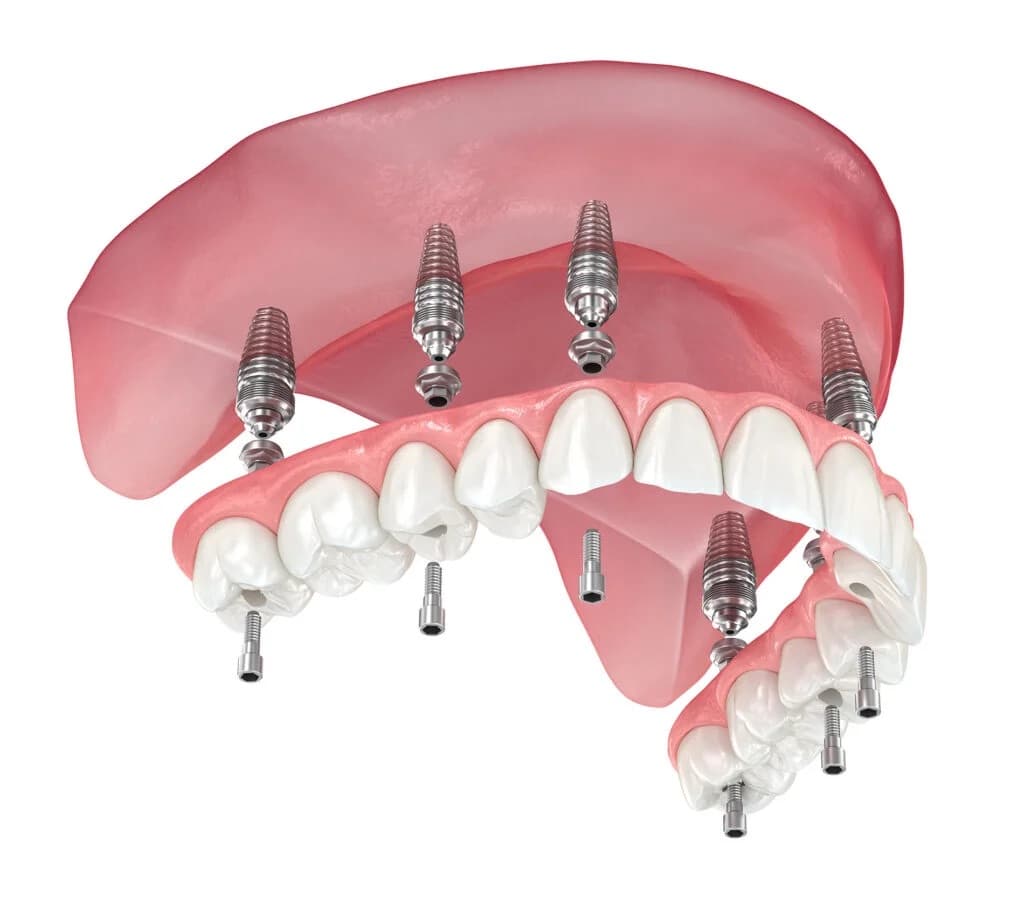
All-on-6 is a comprehensive full-arch treatment built for patients who want the stability of implant-supported teeth without replacing each tooth individually. Six strategically placed implants act like new roots, anchoring a single bridge that restores your chewing, speech and smile aesthetics in one coordinated treatment plan. Because the implants are positioned across the arch—two anterior, two mid-arch and two posterior—they distribute bite forces evenly and offer redundancy if one implant ever needs servicing.
Modern All-on-6 workflows start long before surgery. Clinics capture digital impressions, facial scans and CBCT images to map your bone, nerves and sinus cavities. Using that data, the surgical and prosthetic teams plan implant angles, choose the implant brand and design the temporary bridge before you arrive. This planning is crucial: it determines whether the bridge will support your lips, align with your bite, and maintain a natural smile line without gaps or bulky acrylic.
During surgery, failing teeth are removed, implants are placed under local anesthesia (often with IV sedation), and multi-unit abutments are attached so the restorative team can seat a provisional bridge the same day. That temporary bridge lets you leave with fixed teeth while the implants integrate with bone over the next few months. Once integration is confirmed, the lab fabricates the final bridge—acrylic over titanium for lighter weight or monolithic zirconia when you want maximum durability and stain resistance.
The six implants also give your dentist flexibility to include molar-level teeth for better chewing. While All-on-4 often stops at the second premolar, All-on-6 can extend to the first molar because the posterior implants create a wider base of support. If you clench or grind, your dentist can reinforce the bridge with titanium substructures, prescribe night guards and customize occlusion so the load is balanced and the implants stay healthy.
Anatomy still matters. Some patients need sinus lifts or bone grafting to make room for the posterior implants, while others have abundant bone and can bypass grafts altogether. Candidates with systemic conditions such as diabetes or osteoporosis can usually proceed once their physicians confirm stability, but they may need additional healing time and closer follow-up. That is why our second-opinion service always reviews medical history alongside CT scans—stability is a partnership between surgical skill and your overall health.
Financial planning deserves equal attention. In North America, a single arch of All-on-6 can cost $22,000–$35,000, while reputable clinics in Türkiye, Mexico or parts of Europe may charge $10,000–$18,000 per arch, often including airport transfers and hotel support. Regardless of location, ask how many in-person visits you will need, whether the package covers temporaries, what warranties apply to implants and bridges, and how emergency repairs are handled if you live abroad. A transparent quote protects you from hidden travel costs later.
Life after All-on-6 is primarily about maintenance. Daily home care includes brushing twice, using floss threaders or interdental brushes, and flushing the underside of the bridge with a water flosser. Professional cleanings every four to six months allow the dental team to remove the bridge, disinfect the implants, tighten screws and polish the prosthetic. Patients who follow these routines enjoy decades of function; those who skip them risk peri-implantitis or premature wear.
The sections below dive deeper into the topics patients ask about most—from drawbacks and long-term risks to cost breakdowns, financing strategies, All-on-4 comparisons, and insurance realities. Use the table of contents to jump directly to your biggest question, or read straight through for a step-by-step understanding of how All-on-6 is planned, priced, maintained and compared with other full-arch options.
What is All-on-6 dental implants?
All-on-6 is a full-arch rehabilitation concept where six implants anchor a fixed bridge containing 10–12 prosthetic teeth. Two to four implants are positioned toward the front of the jaw, and two are angled or placed posteriorly to support molar zones. The implants connect to multi-unit abutments, and a titanium- or zirconia-reinforced framework is screwed into place. Patients usually receive a provisional bridge on surgery day and a final bridge after healing, so they never have to go without teeth.
How many teeth do you get on All-on-6 dental implants?
Most All-on-6 bridges include 12 teeth per arch, replicating the span from first molar to first molar. Some patients choose 10 teeth if they never show back teeth when smiling, but six implants typically allow your dentist to provide full molar coverage for better chewing. During smile design visits, the team adjusts tooth length, width and phonetics to match your lips and facial proportions. Ask to see digital previews or wax try-ins so you know exactly what the final tooth count and shape will be.
How do you clean All-on-6 dental implants?
Daily cleaning requires a soft toothbrush, low-abrasive toothpaste, floss threaders or super floss, and a water flosser angled under the bridge. Many clinics teach a “clockwise routine” so each implant surface is cleaned consistently. Interproximal brushes help sweep the transition line where the bridge meets the gum. Professional cleanings every 4–6 months let your dentist remove the bridge for deep cleaning, screw inspections and bite checks.
If dexterity is limited, ask about angled brush handles or powered brush heads. Our second-opinion reports always include customized hygiene plans so you know how to protect the implants regardless of where you complete treatment.
What do I wish I knew before getting dental implants?
Patients commonly wish they knew how important temporary diets, sleep positioning and hydration would be. They also wish someone had prepared them for the emotional adjustment—speech feels different for a few weeks, and carrying a travel-sized hygiene kit becomes a new habit. We share packing lists, sample meal plans and realistic recovery timelines so your first 90 days feel structured rather than uncertain.
What Are the Disadvantages of All-on-6?
All-on-6 spreads forces across six implants, yet it still relies on a single prosthesis per arch. If one implant fails, the whole bridge may require removal and repair. The treatment also involves more surgical time and higher up-front costs than All-on-4. That extra investment makes sense for many patients, but you should weigh it against budget, medical history and travel plans.
Maintenance is another consideration. Because the bridge stays fixed, you must commit to excellent hygiene and regular professional cleanings. Patients with gum disease or limited dexterity may need more frequent maintenance visits, which raises long-term costs. We outline those fees in our reviews so nothing is a surprise later.
What are the problems with All-on-6?
The most common issues include screw loosening, acrylic chipping and the need for bite adjustments as the jawbone settles during the first year. If bone reduction is required to create room for the bridge, some patients notice temporary speech or lip-support changes. None of these challenges are unique to All-on-6, but the larger framework magnifies them because a single repair can involve the entire arch.
Planning mistakes can also trigger problems. If implants are not parallel enough, the framework may rock or require extra machining. We review digital planning files, implant brands and torque reports to ensure every implant is positioned for long-term stability, not just immediate aesthetics.
Can a dental implant cause problems years later?
Yes. Implants can develop peri-implantitis, mechanical fractures or bone loss years after placement. Smoking, unmanaged diabetes, clenching and inconsistent hygiene all increase risk. Even perfectly placed implants can suffer if medication or bite forces change later. Treat your All-on-6 like a high-performance device that requires scheduled servicing rather than a “set and forget” solution.
During our reviews we confirm that the clinic provides night guards, hygiene plans and recall x-rays to catch issues early. If those systems are missing, we flag them as negotiation points or suggest other clinics that prioritize aftercare.
What is the dark side of dental implants?
The “dark side” is inconsistency. Some clinics cut costs by using generic parts, skipping CBCT scans or rushing immediate-load cases without verifying bite forces. Those shortcuts can cause nerve injury, chronic pain, sinus complications or systemic infections. Demand transparency: implant brand names, torque reports, planning scans and a signed maintenance schedule. Reputable teams will happily provide them.
Remember that implants have no nerves—you rely on visual checks and professional monitoring to spot trouble. Ignoring follow-up visits because “nothing hurts” is the fastest path to complications, which is why we coach patients to adopt a maintenance mindset from day one.
Which Is Better: 3-on-6 or All-on-4 Dental Implants?
“Better” depends on anatomy and priorities. All-on-4 places four implants and supports a single fixed bridge, making it efficient for patients with limited bone. The 3-on-6 concept uses six implants to support three smaller bridges, offering easier flossing access and modular repairs but often requiring more bone and higher lab costs. We review your CBCT scans to see which concept matches your bone distribution, hygiene habits and budget.
Which is better, All-on-4 or 3-on-6 dental implants?
All-on-4 has decades of published data and streamlined workflows. 3-on-6 is newer and more dependent on lab quality. If you have strong bone and want bridges you can floss between, 3-on-6 is appealing. If you need a fast, same-day solution with fewer appointments, All-on-4 remains the workhorse. We help you weigh travel tolerance, hygiene routine and financing so you can choose confidently.
What is better, All-on-4 or All-on-6?
All-on-4 excels when bone is concentrated in the front of the jaw and you want the most efficient, cost-effective approach. All-on-6 shines when there is enough bone for extra implants, giving the bridge more support and redundancy. We study your CBCT scans to confirm whether adding two implants meaningfully improves stability or simply increases cost and surgical time.
What is the downside of All-on-4?
The downside is reliance on only four implants; if one fails, the entire bridge may need revision. Immediate loading also demands a strict soft-food diet to avoid overload. Because the bridge is one piece, repairs can be more involved than replacing a single crown. Patients with high bite forces or bruxism may prefer All-on-6 or 3-on-6 for a wider safety margin.
What is the most recommended dental implant?
Rather than one “best” implant, clinicians favor systems with long-term data and global support—Straumann, Nobel Biocare, Neodent, Dentsply Sirona and similar lines. We verify the exact implant family, platform size and abutments listed in your plan so you know spare parts will be available wherever you live. If a quote uses a brand you have never heard of, request clarification before proceeding.
How successful are All-on-6 implants?
Studies report survival rates above 95% over ten years when protocols are followed. Success correlates with digital planning, careful surgery and consistent maintenance. Because there are more implants, bite forces can be balanced evenly, which supports longevity. Patient behavior still matters—night guard usage, low-sugar diets and regular cleanings keep that success rate high.
What is the success rate of 3-on-6 dental implants?
Published case series show success rates in the mid-90% range over five years when executed properly. Because each bridge spans fewer teeth, repairs can be localized, but there are more screws and interfaces to monitor. We recommend working with clinics that show their own long- term data instead of relying solely on marketing averages.
Who is a good candidate for 3-on-6 implants?
Ideal candidates have abundant bone volume—especially in the molar regions—so each bridge has strong support. They value individual bridge maintenance and have the dexterity to floss between bridges. Patients with excellent oral hygiene, bruxism management and willingness to attend regular recalls tend to thrive with the 3-on-6 concept. If bone is limited or you need a faster, more affordable option, All-on-4 or All-on-6 may be better.
How Much Do All-on-6 Dental Implants Cost?
Pricing varies by country, implant system, prosthetic material and whether same-day temporaries are included. In North America or Western Europe a single arch often costs $22,000–$35,000 USD; both arches can exceed $45,000. Clinics in Türkiye or Latin America usually bundle travel support and charge $10,000–$18,000 per arch using internationally recognized implants. Always request a line-item breakdown of diagnostics, surgery, temporaries, finals, medications, follow-up visits and warranty terms so nothing is hidden.
Our second-opinion reports compare quotes from multiple clinics to highlight what is or isn’t included. Sometimes the highest bid delivers the best total value because it covers provisional bridges and hygiene visits. Sometimes a “budget” bid leaves out essentials like night guards. Seeing those differences in writing helps you negotiate confidently.
How much do All-on-6 dental implants cost?
Budget for the whole workflow: six implants, multi-unit abutments, a titanium or zirconia framework, acrylic or ceramic teeth, extractions, sedation, prescriptions and follow-up. Even if a clinic advertises $8,000 per arch, verify whether that includes temporaries, bone grafting, night guards and maintenance. If you only receive a per-implant fee, multiply it by six and add $5,000–$8,000 for lab work to reach a more realistic total.
Also plan for travel and a potential return visit within the first year. Budgeting for these contingencies upfront keeps the experience predictable rather than stressful.
How do All-on-6 prices compare across North America, Europe and Türkiye?
North American clinics typically quote $22,000–$35,000 per arch for All-on-6 because staffing, facility and malpractice costs are high. Western Europe (Germany, Spain, the U.K.) often falls in the $16,000–$24,000 per arch range, while Central and Eastern Europe can be slightly lower yet still use premium implant systems. Türkiye has become the value leader with reputable hospitals charging $10,000–$18,000 per arch and bundling airport transfers, hotel coordination and bilingual case managers.
When comparing regions, look past the headline number. Ask if the quote includes temporaries, sedation, bone grafts, night guards, follow-up visits and warranty coverage. Confirm implant brands and lab materials, and factor in travel, recovery time and the cost of returning for maintenance. A transparent comparison helps you decide whether staying local or traveling abroad delivers the best total value for your budget and comfort level.
How do people afford full-mouth dental implants?
Patients typically blend health savings accounts, employer flexible-spending accounts, third-party medical lenders, in-house payment plans and family support. Some phase treatment—one arch now, one later. Others enroll in subscription-style maintenance plans that bundle cleanings, night guards and repairs into predictable payments. Always request written insurance predeterminations; even partial reimbursement for diagnostics or extractions helps.
Ask clinics about warranty tiers. Paying slightly more for a longer-term service contract can be cheaper than covering multiple unplanned trips later. We show all financing options side by side so you can match them with your cash flow.
Are All-on-6 dental implants worth it?
Many patients say yes because All-on-6 restores chewing efficiency, prevents denture sores and offers redundancy—if one implant fails, the others can support a temporary bridge during repairs. Compared with All-on-4, having six implants can feel more secure for strong bite forces or longer bridges. Whether that redundancy justifies the price depends on your diet, work schedule, travel tolerance and maintenance commitment.
Strategically, All-on-6 is often the “sweet spot” between efficiency and redundancy. Patients who want molar-level chewing surfaces, plan to keep the bridge for decades and appreciate extra safety margin tend to find the premium worthwhile—provided the clinic offers robust aftercare and you are ready for the hygiene routine that protects the implants long term.
What are the cons of All-on-6 dental implants?
Cons include higher surgical complexity, longer anesthesia time and greater expense than All-on-4. Swelling and recovery can be slightly longer, especially if sinus lifts or nerve avoidance procedures are needed. With six implant platforms and six multi-unit abutments, there are more components to monitor. Not every patient has enough bone for six implants without grafting; forcing them into limited bone can compromise results.
Is it true that Medicare now pays for dental implants?
As of 2025, traditional U.S. Medicare does not cover routine dental implants. Some Medicare Advantage plans offer limited dental benefits, but coverage caps are usually too low to fund full-arch therapy. Other national health systems vary and often require proof of medical necessity. Always request written confirmation from your insurer before assuming any implant costs will be reimbursed. If coverage is denied, we can help you prepare appeals or explore medical financing alternatives.
Complex full-arch options shouldn’t feel like guesswork. Share your scans, photographs and cost estimates with TürkiyeDental, and we’ll translate the jargon into clear action items so you can move forward with confidence.
Need clarity on All-on-6 or 3-on-6?
Upload your treatment plans, CBCT scans and budget targets. We’ll compare All-on-4, All-on-6 and 3-on-6 options side by side, highlight hidden costs and suggest the exact questions to ask your dental surgeons before committing.