Treatment • All-on-4 Implants
All-on-4 Dental Implants – Complete Patient Guide
Researching All-on-4? Below you’ll find straight answers to the key questions patients ask before investing in this full-arch solution—how it works, who qualifies, the real benefits and the trade-offs you must plan for.
What Is All-on-4?
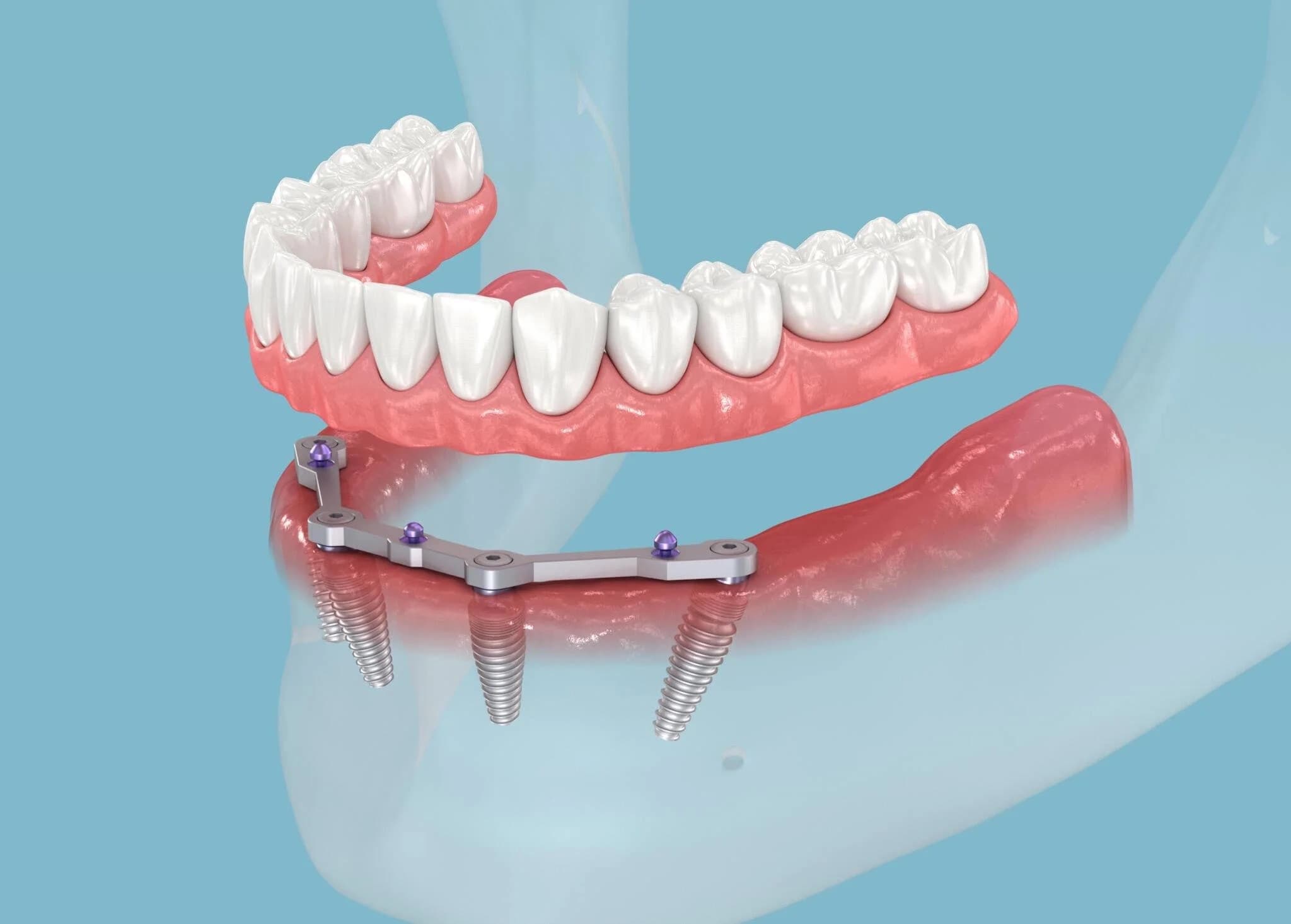
All-on-4 is a full-arch implant therapy where four implants—two straight in the front of the jaw and two angled toward the back—support a fixed bridge. Developed in the 1990s to help patients with limited bone, the concept allows a completely edentulous arch to be restored without placing six or eight implants per jaw. Modern workflows pair CBCT imaging with digital smile design to preview how your final bridge will look before surgery.
Rather than delivering a “one size fits all” solution, the All-on-4 concept is highly customisable. Your dentist selects implant diameters, abutments and prosthetic materials to match bite force, parafunctional habits and aesthetic expectations. Titanium frameworks with high-impact acrylic teeth remain common, while monolithic zirconia bridges are chosen for patients who prioritise durability and stain resistance. The protocol is also adaptable for All-on-5 or All-on-6 when extra support is needed.
What Is the Truth About All-on-Four Dental Implants?
Marketing often makes All-on-4 sound effortless, but the truth is that success depends on meticulous planning, surgical skill and your willingness to follow maintenance instructions. The procedure is not a “same-day miracle” that ends when you leave the clinic; it is a staged treatment that includes several months of healing, multiple check-ups and eventual transition from a provisional bridge to the final prosthesis. Realistic timelines range from four to ten months depending on bone quality and whether adjunctive procedures are required.
Another reality is that All-on-4 is not the cheapest option up front. You are paying for highly trained clinicians, lab technicians, surgical guides, premium biomaterials and a coordinated team who monitor you for years. In exchange, you gain stability, chewing efficiency and aesthetics that removable dentures simply cannot match. During our review we help you separate hype from evidence by examining the brand of implants, the follow-up plan and the warranty terms so you know exactly what you are buying.
How Do All-on-4 Dental Implants Work?
All-on-4 works because the angled posterior implants engage dense cortical bone in the front of the jaw and spread chewing forces over a wider area. By tilting the back implants up to 45 degrees, the surgeon can avoid anatomical structures such as the maxillary sinus or the mandibular nerve while still providing molar-level support. After the implants integrate (osseointegration), a rigid framework is screwed onto them, and the bridge becomes a single functional unit that behaves like a row of firmly anchored teeth.
From the patient’s perspective, this means you can bite into apples, pronounce words that were difficult with a denture and smile without worrying about acrylic plates shifting. The implants also stimulate the jawbone every time you chew, which slows the bone resorption that accelerates with conventional dentures. Understanding these biomechanics helps you appreciate why disciplined hygiene and routine professional maintenance are essential—if plaque or bite forces go unchecked, the entire system can be compromised.
How Are All-on-4 Dental Implants Done?
Planning starts with photographs, facial scans, digital impressions and a CBCT so your dental team can analyse bone height, nerve pathways and smile line. Software simulates implant angles, and the lab fabricates provisional teeth plus a surgical guide that directs each implant into the pre-planned position. On surgery day, sedation keeps you relaxed while local anaesthesia numbs the jaw. The surgeon removes failing teeth if needed, contours bone for a flat ridge, places the four implants and connects multi-unit abutments. Your temporary bridge is then fixed in place so you never leave the clinic without teeth.
After surgery you follow a soft-food diet for several weeks while the implants integrate. The dental team schedules check-ups at 48 hours, two weeks, six weeks and three months to monitor healing and make bite adjustments. Once the bone is stable—usually at the four to six month mark—they take digital scans for the final bridge. This may be a titanium framework with acrylic, a nano-ceramic hybrid or monolithic zirconia depending on your priorities for weight, strength and repairability.
How Are Dental Implants Done?
In general, dental implants involve consultation, imaging, surgical placement, osseointegration and final restoration. A pilot drill creates the path, sequential drills widen it, and the implant fixture is inserted at a precise torque so bone cells can attach to the titanium surface. Healing abutments or cover screws protect the site until impressions are taken for the crown or bridge. Whether you need a single implant or All-on-4, the same biological rules apply: atraumatic surgery, infection control and respect for the soft tissue seal.
Do They Remove All Teeth for All-on-4?
Only teeth with poor prognosis are removed, but All-on-4 typically requires a tooth-free arch so the bridge seats evenly and can be cleaned thoroughly. Strategic bone reduction may also be performed to create space for the prosthetic materials and to align the bite. If you still have stable teeth, your surgeon may propose a staged approach—retaining certain teeth during healing or converting them later—so you always remain functional.
How Far Should Implants Be Placed from One Another?
Implant spacing is critical for load distribution and hygiene access. In All-on-4, the front implants usually emerge near the lateral incisor or canine positions, and the angled posterior implants exit near the second premolar or first molar. Surgeons aim for at least 3 mm of bone between implant shoulders and 1.5–2 mm clearance from natural structures such as the mental nerve or sinus floor. Proper spacing also ensures enough room for the prosthetic screw channels so maintenance appointments remain straightforward.
When reviewing your plan we verify that these distances are documented on the CBCT report and that your dentist has a strategy for handling anatomical variations. If bone is limited, the plan might include zygomatic or pterygoid implants, short implants, or a transition to an All-on-5/6 arrangement for extra support. These details influence the durability of your bridge and the ease of cleaning, so they deserve careful discussion before committing.
Who Is a Good Candidate for All-on-4?
Ideal candidates are patients with multiple failing teeth or loose dentures who want a fixed solution and have sufficient bone in the front portion of the jaw. Commitment to impeccable oral hygiene and regular maintenance visits is crucial because plaque accumulation can damage the soft tissue seal around each implant. We also look for stable medical conditions, a balanced bite and the willingness to wear a night guard when clenching or grinding is present.
Lifestyle factors matter too. Non-smokers or light smokers with well-controlled systemic conditions tend to heal faster and experience fewer complications. Patients who travel frequently or live abroad should ensure they have access to clinicians who can service their prosthesis, as professional cleanings and screw tightening are not optional. During our review we assess whether your schedule, support system and budget align with the follow-up demands of an All-on-4 restoration.
Who Should Avoid Dental Implants?
Patients with uncontrolled diabetes, untreated gum infections, heavy smoking habits, unmanaged bruxism or recent high-dose radiation therapy should avoid or postpone implants until these issues are stabilised. These factors compromise healing, increase infection risk and can lead to early implant failure. For some individuals with severe medical limitations, a well-made removable prosthesis remains the safest option.
Psychological readiness also plays a role. If a patient is not prepared to follow dietary restrictions, invest time in hygiene training or attend scheduled recalls, the likelihood of complications rises dramatically. We sometimes recommend delaying All-on-4 for several months while patients build healthier routines with their dentist or hygienist.
When Should You Not Get a Dental Implant?
Avoid implant surgery during pregnancy, shortly after chemotherapy, or when systemic conditions such as autoimmune flares or heart issues are uncontrolled. Acute infections, active periodontal disease and insufficient keratinised tissue should be treated first. If you are changing medications—such as starting bisphosphonates or blood thinners—coordinate with your physician and implant surgeon to minimise risks.
Financial uncertainty is another reason to pause. All-on-4 requires a multi-visit commitment, and stopping mid-treatment can leave you with a temporary solution that is not designed to last. Make sure the timeline works with your work schedule, travel plans and budget so that you can complete every milestone without rushing or skipping appointments.
At What Age Should You Not Consider Dental Implants?
Chronological age is less important than biological age. Teenagers and very young adults should wait until jaw growth is complete, but there is no upper age limit if bone quality and medical health are adequate. We routinely review successful All-on-4 cases for patients in their seventies and eighties who follow their physicians’ recommendations and maintain proper nutrition during healing.
For older adults we pay close attention to medications that affect bone metabolism, dexterity for at-home cleaning and the availability of caregivers who can help with post-op instructions. If those boxes are checked, age alone should not disqualify you—your motivation and health status are the deciding factors.
What Are the Benefits of All-on-4?
All-on-4 replaces removable dentures with a fixed bridge you can chew and speak with confidence. There is no acrylic palate covering your taste buds, and the rigid framework eliminates rocking during meals. Because the implants are anchored in bone, they help prevent the sunken appearance that develops when dentures accelerate bone loss. Many patients also report clearer speech, improved digestion from better chewing and the freedom to laugh or exercise without adhesive worries.
From a maintenance perspective, a fixed bridge can be easier to live with than removable dentures. You simply brush, use floss threaders or a water flosser, and attend professional cleanings every four to six months. Clinics often provide duplicate screw-retained bridges for patients who travel frequently so they can remain functional even if a repair is needed.
Are All-on-4 Worth the Money?
For many patients All-on-4 is worth the investment because it consolidates multiple dental problems—decayed teeth, wobbly dentures, bone loss—into one coordinated solution. Instead of repeatedly repairing crowns or relining dentures, you budget for a definitive treatment with a clear maintenance roadmap. The value shows up in day-to-day life: eating steak without fear, smiling in photos, or travelling without a bag full of adhesives and pastes.
That said, “worth it” varies by person. We evaluate whether your quote includes provisional teeth, extractions, sedation, post-op medications, maintenance visits and warranty coverage. Transparent pricing helps you compare clinics fairly and avoid surprise fees later. If a plan seems inexpensive, we dig into what has been omitted—sometimes it is follow-up care, sometimes it is lab quality. Knowing this up front empowers you to choose the clinic that balances cost, expertise and aftercare.
What Is the 3/2 Rule for Dental Implants?
The 3/2 rule is a planning guideline stating that implants should have at least 3 mm of surrounding bone and 2 mm of healthy soft tissue. Following this rule maintains blood supply, minimises recession and ensures the prosthetic junction looks natural. In All-on-4 cases, it also reduces the risk of food trapping under the bridge and helps the gums remain pink and stable over time.
During our reviews we confirm that your surgeon has documented these biological safety margins. If CBCT scans show thin facial bone or limited keratinised tissue, the plan might include soft tissue grafting, tissue-level implants or modified implant positions. Respecting the 3/2 rule now saves you from recession-related repairs later, which protects both your investment and comfort.
What Are the Downsides of All-on-4?
The primary downside is that the entire arch depends on four implants. If one fails, the bridge may need to be removed, the implant replaced and the prosthesis remade, which can be time-consuming and costly. Immediate loading also means you must follow a very specific diet during healing—soft foods only—to avoid overloading the new implants. Patients who ignore these instructions risk loosening screws or fracturing the provisional bridge.
Another consideration is maintenance access. A fixed bridge cannot be removed at home, so you need special floss threaders, interdental brushes and a water flosser to keep the underside clean. Professional cleanings require unscrewing the bridge, which takes longer than a standard hygiene appointment and can incur additional fees.
What Is the Downside of All-on-4?
Beyond maintenance, the downside includes the psychological adjustment to having a single, full-arch prosthesis. Some patients feel a period of altered speech or increased salivation as they adapt to the new tooth contours. Others find that the acrylic or zirconia bridge transmits chewing vibrations differently than natural teeth. These sensations typically improve within a few weeks, but it is important to anticipate them.
What Are the Disadvantages of All-on-4?
Disadvantages can include the need for bone reduction, potential sinus involvement in the upper jaw and the requirement to travel back to the treating clinic for major repairs. If you clench or grind your teeth, the acrylic teeth can wear faster and require periodic resurfacing or replacement. Patients with limited manual dexterity might struggle with cleaning tools, making professional maintenance even more critical.
What Are the Downsides of a Dental Implant?
All dental implants carry risks such as infection, nerve disturbance, sinus complications and mechanical failures. With single implants, a complication typically affects only one tooth; with All-on-4, a single issue can impact the entire bridge. Furthermore, implants require ongoing monitoring—ignoring recall visits can allow minor inflammation to become serious bone loss, threatening the entire restoration.
What Is the Negative to Getting Dental Implants?
Surgery involves downtime, medications and, in some cases, temporary bruising or swelling. There are financial negatives too: high-quality implants, CAD/CAM frameworks and follow-up visits add up, and insurance rarely covers the full amount. Travelling abroad for treatment can reduce initial costs, but you must budget for potential flights back if repairs are needed.
What Are the Dark Sides of Dental Implants?
The “dark side” refers to what happens when planning shortcuts are taken: implants placed into insufficient bone without grafting, generic components used instead of authentic parts, or aftercare neglected once the final bridge is delivered. Such compromises can lead to broken screws, peri-implantitis, pain and even implant loss. Transparency about these risks lets you insist on detailed treatment notes, maintenance plans and warranties before you commit.
TürkiyeDental’s second-opinion service is designed to uncover those blind spots. We cross-check your scans, proposed materials and schedule so you can weigh the pros and cons with your eyes open rather than relying solely on marketing claims.
How Long Do All-on-4 Dental Implants Last?
Well-maintained All-on-4 restorations routinely last 15–20 years or more, with many studies showing implant survival rates above 95% at the ten-year mark. Longevity depends on three pillars: surgical precision, prosthetic design and patient maintenance. Following the hygiene protocol and keeping recall visits every four to six months helps your dental team catch issues such as screw loosening or acrylic wear long before they become emergencies.
How Long Do Dental Implants Last?
Single implants and bridges can last decades as well, provided bone levels remain stable and the bite is balanced. The titanium or zirconia fixtures themselves can theoretically last a lifetime, but the prosthetic components (crowns, screws, acrylic teeth) may need periodic refreshes. When we review your plan we ask how often the clinic expects to replace the prosthetic teeth and whether that cost is covered under warranty or billed separately.
Are Dental Implants Removable?
The implants themselves are not removable—they integrate with the bone and are designed to be permanent. However, the prosthetic components attached to them can be removed by a dentist if maintenance or repairs are needed. This is true for single implant crowns as well as All-on-4 bridges. Think of it as a modular system: the “root” stays, while the “tooth” can be unscrewed and serviced when necessary.
Are Dental Implants Removable?
Patients sometimes confuse fixed implant bridges with removable implant dentures (often called overdentures). Overdentures snap in and out daily, while All-on-4 bridges are only removed by the clinician. Clarifying this distinction helps set expectations about cleaning and daily routines. During your consultation ask how often the bridge will be removed for deep cleaning and whether that service is included in your follow-up package.
Temporary Teeth with All-on-4
One of the biggest advantages of All-on-4 is the ability to fit a reinforced temporary bridge on the same day as implant placement. These provisional teeth are usually made from acrylic and are designed to protect the implants as they integrate. You will follow a soft-food diet and avoid biting with the front teeth during the first six to eight weeks, but you will still have an esthetic smile and functional chewing ability.
Do You Get Temporary Teeth While Waiting for Implants?
Yes—immediate temporaries are a standard part of modern All-on-4 workflows. If the clinic you are considering does not include temporaries, ask why. Some surgeons prefer to delay loading in extremely compromised bone, but in most cases a same-day provisional bridge or at least a high-quality immediate denture is provided so you never go without teeth.
How Long Do You Go Without Teeth When Getting Implants?
With All-on-4 the goal is zero downtime without teeth. Even if extractions are necessary, the provisional bridge is attached before you leave the chair. In rare cases where healing must occur first, we ensure a temporary denture or flipper is ready so you can maintain your appearance and speech while waiting for implant placement.
How Many Teeth Do You Get on All-on-4?
A typical All-on-4 bridge includes 10 to 12 teeth per arch, depending on your smile line and bite relationship. Some patients show more gum when they smile and benefit from a 12-tooth design, while others with shorter arches may only require 10 teeth to maintain a balanced bite. Your dental team will discuss tooth count during the smile design phase so the final result looks harmonious with your facial features.
How Many Teeth Do You Get on All-on-4 Dental Implants?
The number can be customised, but most All-on-4 bridges include replacements for teeth #4 to #13 in the upper arch and #20 to #29 in the lower arch using the Universal Numbering System. This gives you molar-like chewing surfaces without extending the bridge so far back that hygiene becomes difficult.
How Many Teeth Are on an All-on-4 Implant?
Each implant does not correspond to a single tooth. Instead, four implants collectively support the entire bridge. This is why precise spacing and angulation matter: the implants share the load from all 10–12 teeth, distributing chewing forces evenly across the arch. If you require extended chewing surfaces, your dentist may recommend an All-on-5 or All-on-6 configuration for added stability.
Eating, Talking & Daily Life With All-on-4
Most patients adapt to eating and speaking with All-on-4 within a few weeks. Start with soft foods and gradually reintroduce firmer textures as advised by your clinic. Practice reading aloud or singing to help your tongue adjust to the new tooth contours. Night guards are often recommended to protect the bridge from grinding or clenching during sleep.
Does Food Get Under All-on-4 Dental Implants?
Some food debris can collect under the bridge, which is why water flossers, super floss and interdental brushes are essential. The bridge is designed with a smooth, convex underside so food rinses out easily. During your hygiene training appointment, the team should show you exactly how to clean every surface and which tools to use morning, night and after meals.
What I Wish I Knew Before Getting All-on-4
Many patients say they wish they had known how important the maintenance routine would be. They also wish someone had told them to schedule a few days of downtime after surgery, arrange soft foods in advance and invest in a good-quality water flosser from day one. Our reviews include a preparation checklist so you enter treatment with realistic expectations about healing, follow-up appointments and long-term care.
What I Wish I Knew Before Dental Implants?
Patients often wish they had a clearer picture of the timeline—from diagnostics to final bridge—and the number of visits required. They also highlight the value of wearing the provisional bridge gently to avoid fractures, and of keeping a small travel kit with pain medication, saline rinse and wax in case minor irritations arise during the first weeks.
What Is the 2-2-2 Rule for Teeth?
The 2-2-2 rule is a simple routine often recommended after implant surgery: apply cold compresses for 20 minutes on/20 minutes off during the first 24 hours, take prescribed medication every 2 hours if directed, and avoid rinsing for the first 2 hours post-op. Some clinicians use 2-2-2 to describe brushing twice a day, flossing once a day and visiting the hygienist twice a year. Ask your clinic how they define it so you can follow their specific protocol precisely.
What Does No One Tell You About Dental Implants?
Few clinics emphasise how important lifestyle habits are. Hydration, nutrition, sleep quality and stress management all influence healing. Another lesser-known fact is that implants do not contain nerves, so you rely on the surrounding gum tissue for feedback. This means you must be extra mindful of biting forces—you won’t feel early warning signs the way you did with natural teeth. Our coaching covers these nuances so you are prepared for life after surgery.
Who Does All-on-4 Dental Implants Near Me?
Look for clinics that present real case photos, list the implant systems they use and explain their maintenance protocol. Board-certified oral surgeons, periodontists and experienced implant-focused general dentists can all provide All-on-4, but what matters most is the team approach. Ask who plans the case, who performs the surgery, who fabricates the bridge and how complications are handled. Our second-opinion service helps you evaluate the clinics already on your shortlist by reviewing their quotes, timelines and proposed materials.
Who Does Dental Implants Near Me?
If you are still exploring options, start with local dental societies, peer referrals and online reviews that mention implant experience specifically. Schedule consultations with at least two providers to compare diagnoses and treatment philosophies. Bring your x-rays and questions so you can evaluate their communication style and transparency before committing.
Where Are All-on-4 Implants the Cheapest?
Treatment costs vary widely by country due to differences in clinic overhead, lab expenses and currency exchange. Türkiye, Mexico and parts of Eastern Europe often offer lower prices than North America or Western Europe, yet many clinics in those regions still use premium implant brands and digital workflows. The key is to compare what is included: travel, accommodation, aftercare visits, and contingency plans if complications arise once you return home.
Where Are Dental Implants the Cheapest?
Beyond All-on-4, single implants are also less expensive in countries with lower operating costs. However, the cheapest quote is not always the most cost-effective once you factor in travel, potential follow-up flights, and the value of a local team who can handle adjustments promptly. We help you build a cost comparison that highlights not just the headline fee but the total value, including warranties, genuine components and long-term support.
Need clarity on your All-on-4 plan?
TürkiyeDental provides independent second opinions. Upload your scans, provisional designs and cost breakdowns, and we’ll explain timelines, risks, benefits and alternatives so you can decide with confidence.