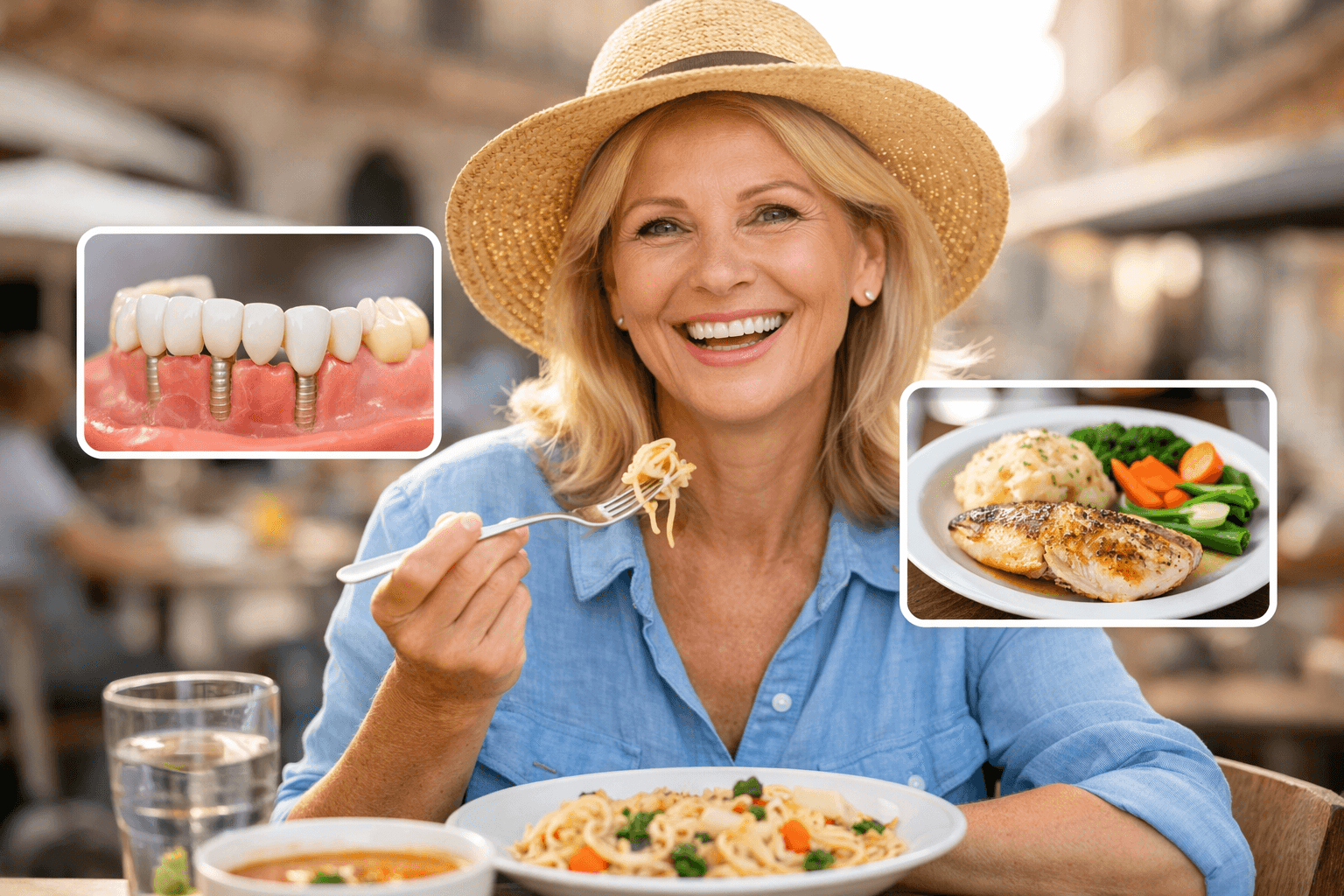
What Are Temporary Teeth After Dental Implants?
Before we dive into the menu, it helps to understand exactly what is sitting in your mouth right now. Temporary teeth after dental implants—often called "provisionals" or "temps"—are placeholders. They are designed to fill the gap in your smile and preserve the shape of your gums while the real magic happens beneath the surface.
Depending on your specific procedure, these might be a single temporary crown, a bridge, or a full arch of temporary implant teeth (common in "All-on-4" procedures). They are typically made from acrylic or a composite resin material. While these materials are durable enough for smiling and speaking, they are significantly softer and more flexible than the zirconia or porcelain used for your final permanent teeth.
These temporary dentures after implants serve a critical dual purpose. First, they provide you with aesthetics and basic function so you don't have to go toothless during recovery. Second, and more importantly, they are designed to be "passive." This means they are often slightly shorter or shaped differently to minimize the pressure placed on your healing implants. They are the bodyguards of your new smile, taking the brunt of daily life so your implants can integrate undisturbed. Because they are not the final product, they aren't built to withstand the full crushing force of your jaw—which is exactly why your diet needs to adapt.
Why Diet Matters During the Implant Healing Period
You might wonder, "If the implants are titanium screws, aren't they strong immediately?" The titanium itself is strong, but the bone holding it isn't ready yet. The success of your surgery relies entirely on a process called osseointegration.
Osseointegration is the biological process where your jawbone grows around and into the surface of the dental implant, locking it in place. Think of it like setting a fence post in wet concrete. If you push and pull on the post while the concrete is still wet, it will never set securely. It will remain loose and eventually fail. Your implant healing diet is designed to keep that "concrete" undisturbed while it hardens.
When you chew, you exert a massive amount of force—sometimes up to 200 pounds of pressure in the molar region. During the initial soft food diet after dental implants, your goal is to minimize micromotion. If hard or chewy foods cause the implant to move even a fraction of a millimeter during the early weeks, it can disrupt the bone growth. This can lead to fibrous tissue forming around the implant instead of solid bone, which typically results in implant failure. The restrictions aren't there to punish you; they are the most critical tool you have to ensure your new smile lasts a lifetime.
What Can You Eat With Temporary Teeth? (Safe & Comfortable Foods)
Now for the good part: what you can eat. A soft food diet doesn't mean a boring diet. You can still enjoy varied, savory, and satisfying meals while respecting the rules of eating after dental implants. The general rule of thumb is simple: if you can cut it with the side of a fork, it is generally safe to eat.
Protein Options
You need protein to heal, but a steak is out of the question. Instead, opt for flakey white fish (like cod or tilapia), which requires almost no chewing force. Eggs are fantastic in any form—scrambled, poached, or an omelet with cheese. Slow-cooked meats like pulled pork or braised beef that fall apart effortlessly are also excellent choices. Tofu and ground meats (like turkey or beef in a shepherd's pie) are also safe staples.
Carbohydrates
This is the easiest category. Mashed potatoes are the classic recovery food for a reason, but you can also enjoy soft pasta dishes (like mac and cheese), risottos, polenta, and oatmeal. Overcooked rice is usually fine, but be careful with al dente textures. Pancakes and soft waffles can make breakfast feel normal again.
Fruits and Vegetables
You don't have to skip your greens, but you do have to change how you prep them. Steamed or roasted vegetables that are fork-tender—like carrots, squash, or broccoli florets—are perfect. Avocados are a superfood for implant patients because they are soft, filling, and healthy. For fruits, stick to bananas, peaches, melons, and applesauce. Smoothies are a great way to get nutrients, but remember: never use a straw, especially in the first few days, as the suction can cause complications.
Dairy and Soups
Yogurt, cottage cheese, and soft cheeses are great snacks. Soups are your best friend, but ensure they aren't boiling hot if you are still numb or healing from surgery. Hearty stews where the ingredients have softened significantly are satisfying and safe.
When thinking about what can I eat with temporary teeth, focus on texture rather than restriction. You can still have flavor, spices, and variety—just without the crunch.
Foods to Avoid With Temporary Teeth — and the Real Reasons Why
Knowing foods to avoid with temporary teeth is just as important as knowing what to enjoy. While your temporary teeth are decent placeholders, they are made of plastic-like materials that can snap, chip, or debond if they meet the wrong opponent. Furthermore, hard foods transmit shockwaves directly to the healing bone.
The "No-Go" List
Hard Foods: Ice, hard candies, nuts, and popcorn kernels are dangerous. Biting down on an unpopped kernel is one of the fastest ways to crack a temporary bridge.
Crunchy Foods: Chips, pretzels, taco shells, and crusty artisanal bread should be avoided. These foods require sharp, vertical biting force that can rock an implant.
Chewy and Sticky Foods: Caramel, taffy, gummy bears, and chewing gum are strictly prohibited. Sticky foods can create a suction force that literally pulls your temporary teeth off the implants. Even tough meats like steak or jerky require a grinding motion that is terrible for healing implants.
Raw Vegetables: A raw carrot or apple stick requires significant force to break down. If you want these flavors, cook them or blend them.
Biting vs. Chewing
One of the most specific temporary implant teeth eating restrictions involves how you eat. You must avoid biting directly into anything with your front teeth. Even a sandwich or a slice of pizza requires a "tear and pull" motion that puts stress on the front implants. If you are going to eat a burger (a soft one), cut it into pieces and place them in the back of your mouth. Never use your front temporary teeth as tools to tear open packages or bite fingernails.
The risk here isn't just about breaking the temporary teeth—though that is inconvenient. The real risk is "loading" the implant too early. If you can temporary implant teeth break, you are likely putting too much pressure on the bone beneath them, too.
Can You Eat Normally With Temporary Teeth?
The short answer is: not entirely, but you can get close to a "new normal." When patients ask, "Can you eat normally with temporary teeth?" they usually mean, "Can I go back to my old habits immediately?" The answer to that is no.
However, if "normal" means sitting down to a dinner with family and not feeling hungry afterward, then yes. You absolutely can. The key is adaptation. You aren't relegated to a life of liquids, but you do have to become a "mindful eater."
Chewing with temporary implant teeth requires you to slow down. You need to chew bilaterally—meaning you should try to distribute food evenly on both sides of your mouth to balance the pressure. If you have implants on only one side, do the majority of your chewing on the side with your natural teeth.
Are temporary teeth strong enough to eat? Yes, they are strong enough to eat food, but they aren't strong enough to process force. They function well for a modified soft diet, but they lack the shock-absorbing ligaments that natural teeth have. This means you won't feel pressure the same way. You have to consciously choose softer options because your mouth won't give you the same warning signals that you're biting too hard until it's too late.
Eating While Traveling or on Holiday With Temporary Teeth
Life doesn't stop just because you had surgery. Many people combine dental tourism with a vacation, or simply have business trips booked during their recovery. Eating on holiday with dental implants is entirely possible, but it requires a bit of strategy.
When traveling with temporary teeth, restaurant choices matter. Italian restaurants are often safe bets because pasta, risotto, and soft fish dishes are staples. Buffets can also be excellent because they offer variety and you can inspect the texture of the food before putting it on your plate.
If you are exploring international cuisines, be cautious with street food, which can sometimes be tougher or crunchier than expected. In places like France or Italy, resist the urge to tear into a baguette with your front teeth. Instead, tear small pieces off with your hands or cut them with a knife.
One of the biggest tips for dental implant recovery while traveling is to pack a "survival kit." Bring a small travel knife so you can cut food up wherever you are. Carry protein shakes or soft bars in your bag in case the only options at the airport are hard pretzels or chewy bagels. You can enjoy the local culture and flavors without compromising your healing; you just have to be the person who uses a knife and fork for everything—even the pizza.
How Long Do Eating Restrictions Last With Temporary Teeth?
The timeline for restricted eating varies by patient, but patience is your best ally. Generally, the question "how long soft food after dental implants" depends on bone quality and where the implants were placed.
Typical Timeline
Weeks 1–2: This is the critical healing phase. Your diet should be very soft (yogurt, soup, mashed potatoes). The tissue is healing, and the implants are at their most vulnerable.
Weeks 3–8: You can usually graduate to "fork-tender" foods. This includes soft chicken, pasta, and cooked veggies. You are still avoiding anything crunchy or hard.
Month 3 onwards: Depending on your surgeon's advice, you may start testing slightly firmer foods, but the ban on nuts, ice, and hard candy usually remains until the final teeth are placed.
The transition from temporary vs permanent implant teeth is a marathon, not a sprint. The implant healing timeline typically spans 3 to 6 months. It takes this long for the bone to fully fuse with the titanium. Once your dentist confirms osseointegration is complete via X-ray, you will be fitted for your final teeth, and the dietary restrictions will be lifted.
Temporary Teeth vs Final Teeth: Eating Differences Explained
It is important to manage your expectations by understanding the difference between temporary vs permanent implant teeth. Your temporaries are the training wheels; your finals are the sports car.
When you are eating with final implant teeth, the experience is completely different. Permanent teeth are typically reinforced with titanium bars or made from high-strength zirconia. They are anchored into fully healed bone that is as strong (or stronger) than your natural tooth roots.
With your final teeth, you regain nearly 90–100% of your natural bite force. You can bite into an apple. You can chew a steak. You can eat a handful of almonds. The fear of breakage disappears because the materials are engineered for durability. Implant-supported teeth strength in the final stage is immense.
While the temporaries feel a bit plastic and require caution, the finals will feel like a part of you. They are polished, smooth, and solid. The dietary sacrifices you make now with your temporaries are the "payment" for the total food freedom you will enjoy once the final prosthesis is attached.
Warning Signs While Eating With Temporary Teeth
Even if you follow all the rules, things can happen. It helps to know the difference between normal settling and legitimate temporary teeth problems.
Discomfort: Some mild sensitivity in the gums is normal when you start chewing again. However, sharp pain when you bite down is not. If you feel a sharp jolt every time you chew, stop and call your dentist.
Movement: Your temporary teeth should not rock or shift. If you feel the bridge or crown moving when you chew, this is a red flag. It might mean the temporary screw has loosened or the adhesive has failed. Do not try to "eat through it." Loose temporaries can cause irritation to the healing gums and bone.
Clicking Sounds: If you hear a clicking sound when you chew, this could indicate that the bite is slightly off or a component is loose.
If you experience any implant healing concerns, contact your clinic immediately. Most issues with temporaries are easy fixes—a retightened screw or a quick polish of a high spot. Ignoring these signs, however, can lead to damage to the underlying implant.
Frequently Asked Questions
Can temporary implant teeth break?
Yes, they can. Temporary teeth are usually made of acrylic or composite, which is much softer than natural teeth or permanent zirconia prosthetics. If you bite down on something hard (like ice or a nut) or use your teeth as tools, the acrylic can snap. If this happens, don't panic—call your dentist. They can usually repair or replace the temporary quickly.
What happens if I accidentally eat something hard?
If you accidentally bite down on a nut or a piece of bone, stop chewing immediately. Check your temporary teeth in the mirror to see if there are cracks. Pay attention to how the implant site feels. If there is no pain and the tooth feels stable, you likely got away with it. However, if you feel pain or looseness, schedule a check-up to ensure the micromotion didn't affect the healing bone.
Can I drink alcohol while healing?
It is best to avoid alcohol for at least the first 72 hours after surgery, especially if you are on pain medication or antibiotics. Alcohol can thin the blood and delay healing. Once you are past the initial surgical recovery, moderate alcohol consumption is usually fine, but avoid sugary cocktails that can get trapped under the temporary appliance.
Can I bite into food at all?
You should avoid biting into food with your front temporary teeth (the incisors). The lever force created by biting into an apple or sandwich is dangerous for healing implants. Always cut your food into bite-sized pieces and chew with your back teeth, where the force is vertical and more stable.
Is discomfort normal when chewing?
Mild tenderness in the gums is normal for the first few weeks as the tissue heals around the temporaries. However, chewing should not be painful. If you feel sharp pain or deep aching in the bone when you apply pressure, switch back to a liquid diet immediately and contact your oral surgeon.
How do I clean around temporary teeth after eating?
Gently rinse your mouth after every meal with water or a saltwater solution. Use a soft toothbrush to clean all surfaces, and consider using a water flosser at a low setting. Avoid using toothpicks or any sharp objects near the implant site.
Are there specific foods I should always avoid?
Yes, avoid sticky foods (like caramel and chewing gum), very hard foods (such as nuts, hard candies, and crunchy chips), and foods that can crumble and get trapped (popcorn, seeds). Stick to soft, easy-to-chew items until your dentist gives you the go-ahead.
Can I eat hot or cold foods with temporary teeth?
Mild temperature extremes are usually okay, but be cautious with very hot soups or ice-cold drinks as sensitivity can occur. Let your food come closer to room temperature when possible to avoid discomfort.
What should I do if food gets stuck under my temporary teeth?
Rinse your mouth gently with water or a saltwater rinse to dislodge the food. If needed, use an interproximal brush or a water flosser on a low setting. Never pry with sharp objects, as this can damage the gum tissue or the temporaries.
Temporary Restrictions, Long-Term Freedom
Navigating life with temporary teeth after dental implants is a balancing act, but it is a temporary one. The restrictions on hard and crunchy foods are a small price to pay for the massive reward waiting at the finish line: a permanent, beautiful smile that lets you eat whatever you want for the rest of your life.
Think of this healing period as a short investment. By choosing soft proteins, avoiding the crunch, and listening to your body, you are ensuring implant healing success. Before you know it, you’ll be trading in those acrylic temps for your final teeth, and that first bite of crisp apple or juicy steak will taste better than you ever imagined.
Until then, grab a fork, cut your food small, and rest easy knowing you are doing exactly what is needed to make your new smile last a lifetime.