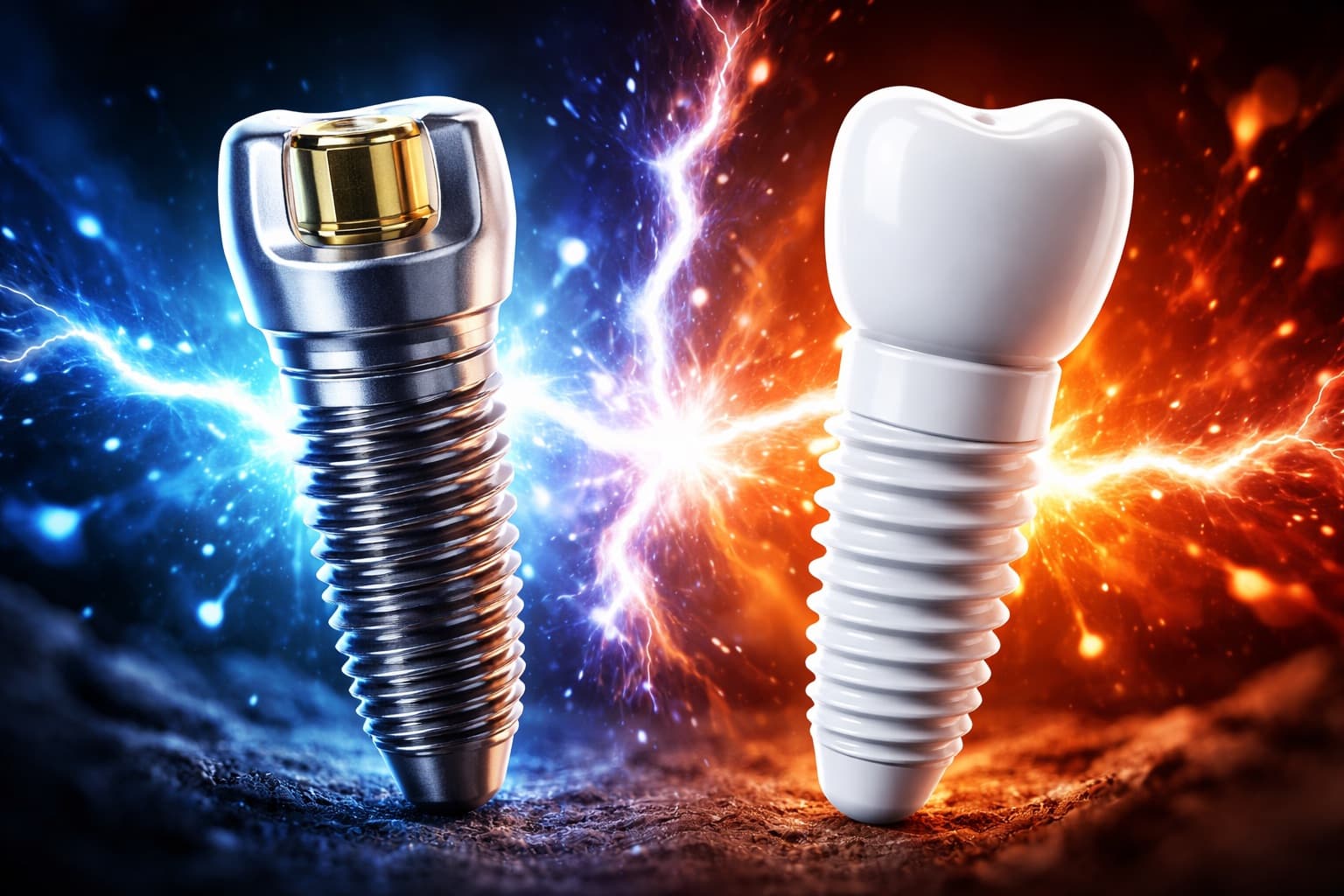
Understanding Dental Implants: Why Material Matters More Than You Think
Before diving into the specifics of titanium versus zirconium, it's essential to understand what dental implants actually are and why the material choice carries such significance.
A dental implant is essentially an artificial tooth root—a small post that's surgically placed into your jawbone to serve as a foundation for a replacement tooth or bridge. Unlike dentures that sit on top of your gums or bridges that rely on adjacent teeth for support, implants integrate directly with your bone tissue, creating a stable, permanent foundation that functions remarkably like a natural tooth root.
The implant itself typically consists of three components: the implant post (which goes into the bone), the abutment (a connector piece), and the crown (the visible tooth portion). When we talk about titanium versus zirconium implants, we're primarily discussing the material of that crucial implant post—the part that will become a permanent part of your body.
Why does this material matter so much? The implant post must accomplish several critical tasks simultaneously. It needs to be biocompatible, meaning your body accepts it without triggering adverse reactions or rejection. It must be strong enough to withstand the considerable forces of chewing—your back teeth can generate bite forces exceeding 200 pounds per square inch. It needs to facilitate osseointegration, the process by which bone cells grow onto and fuse with the implant surface, creating a stable bond. And ideally, it should be aesthetically compatible with your natural tissues, especially if it's visible through the gums.
The material you choose will influence not just the immediate success of your implant surgery, but also the long-term durability, appearance, and biological compatibility of your restoration. It's a decision that deserves careful consideration, which is exactly what we'll provide in the sections that follow.
Need clarity?
Get an independent review of your implant plan and recommendations tailored to your case.
Titanium Implants: The Gold Standard with Decades of Proven Success
A Legacy of Clinical Excellence
Titanium dental implants represent the foundation upon which modern implant dentistry was built. The story begins in 1952, when Swedish orthopedic surgeon Per-Ingvar Brånemark made a serendipitous discovery while studying bone healing in rabbits. He had placed titanium chambers in the animals' bones to observe healing processes, and when he attempted to remove them, he found they had fused permanently with the bone tissue. This accidental discovery of osseointegration—the direct structural and functional connection between living bone and the surface of a load-bearing artificial implant—revolutionized not just dentistry, but all of reconstructive medicine.
Brånemark placed the first titanium dental implant in a human patient in 1965. That patient, Gösta Larsson, kept those implants functioning successfully until his death in 2006—a remarkable 41-year testament to the durability and reliability of titanium as an implant material. Since then, titanium implants have been placed in tens of millions of patients worldwide, accumulating an unparalleled body of clinical evidence and long-term success data.
This extensive history matters tremendously. When you choose a titanium implant, you're selecting a technology with over six decades of refinement, research, and real-world performance data. Dentists have placed titanium implants in virtually every conceivable clinical scenario, learning how they perform in different bone types, anatomical locations, and patient populations. This wealth of experience translates into predictable outcomes and well-established protocols for success.
Material Properties: Why Titanium Works So Well
Titanium's success as an implant material stems from a unique combination of physical and biological properties that make it almost ideally suited for the demanding environment of the human mouth.
From a mechanical standpoint, titanium offers an exceptional strength-to-weight ratio. It's remarkably strong—capable of withstanding the repetitive, substantial forces of chewing that occur thousands of times per day—yet it's also relatively lightweight and less dense than many other metals. This combination means titanium implants can be designed with appropriate dimensions for the jawbone without being unnecessarily bulky or heavy.
Titanium is also highly corrosion-resistant. In the harsh, moist environment of the mouth, where pH levels fluctuate and various chemicals from foods and beverages are constantly present, many metals would corrode or degrade over time. Titanium, however, forms a stable oxide layer on its surface that protects it from corrosion, ensuring the implant maintains its structural integrity for decades.
Perhaps most importantly, titanium possesses a property called osseoconductive potential. The oxide layer that forms on titanium's surface doesn't just protect against corrosion—it also provides an ideal surface for bone cells to attach to and grow upon. When a titanium implant is placed in bone, osteoblasts (bone-forming cells) migrate to the implant surface, attach to it, and begin depositing new bone tissue directly onto the titanium. Over a period of several months, this process creates a direct bone-to-implant interface with no intervening soft tissue layer—a phenomenon that's essential for the implant's long-term stability and function.
Biocompatibility and Osseointegration: The Biological Success Story
The term "biocompatible" is often used loosely, but in the context of dental implants, it has a specific and profound meaning. A truly biocompatible material doesn't just avoid causing harm—it actively integrates with living tissue in a way that supports normal biological function.
Titanium's biocompatibility is exceptional. The human immune system, which is exquisitely designed to detect and respond to foreign materials, generally treats titanium as biologically inert. This means that titanium implants rarely trigger inflammatory responses, allergic reactions, or immune-mediated rejection. The body essentially accepts titanium as if it were a natural part of the skeletal system.
This acceptance facilitates the remarkable process of osseointegration. Within days of implant placement, blood proteins adhere to the titanium surface, creating a conditioning film. Bone cells then migrate to this surface, attach, and begin their work of bone formation. Over the following weeks and months, new bone tissue grows directly onto and into the microscopic irregularities of the implant surface, creating a mechanical interlock that becomes progressively stronger over time.
The success rates for titanium implant osseointegration are impressive. In ideal conditions—adequate bone quality and quantity, proper surgical technique, appropriate healing time, and good patient health—titanium implants achieve osseointegration success rates exceeding 95-98%. Even in more challenging scenarios, such as compromised bone quality or immediate placement after tooth extraction, success rates typically remain above 90%.
This high degree of predictability is one of titanium's greatest strengths. When your dentist places a titanium implant, they can be reasonably confident, based on decades of clinical evidence, that it will successfully integrate with your bone and provide stable, long-term support for your restoration.
Durability and Longevity: Built to Last a Lifetime
One of the most common questions patients ask about dental implants is, "How long will it last?" With titanium implants, the answer is encouraging: when properly placed and maintained, they can last a lifetime.
Long-term studies tracking titanium implants over 20, 30, and even 40 years show survival rates that remain remarkably high. A comprehensive review of long-term implant studies found that titanium implants have survival rates of approximately 95% at 10 years and around 90% at 20 years. These figures are particularly impressive when you consider that they include implants placed decades ago, before many of the refinements in implant design, surface treatments, and surgical techniques that are standard today.
The durability of titanium implants stems from several factors. The material itself doesn't fatigue or weaken over time under normal loading conditions. The osseointegrated bond between bone and titanium, once established, tends to remain stable or even strengthen over time as bone continuously remodels around the implant. And titanium's corrosion resistance ensures that the implant maintains its structural integrity even after decades in the oral environment.
It's worth noting that when implants do fail, it's rarely because the titanium itself breaks or degrades. Instead, failures typically result from biological complications such as peri-implantitis (inflammation of the tissues around the implant, similar to gum disease around natural teeth), inadequate bone quality or quantity, or biomechanical issues related to implant positioning or excessive forces. These are factors that can affect any implant material, not limitations specific to titanium.
Aesthetic Considerations: The Gray Area
If there's one area where titanium implants face legitimate criticism, it's aesthetics—specifically, the potential for the gray color of titanium to show through the gums or be visible if gum recession occurs.
Titanium has a distinctive dark gray, metallic appearance. In most cases, this isn't visible because the implant is completely covered by gum tissue and the crown. However, in certain situations, the titanium can become visible or create aesthetic compromises:
- Thin Gum Biotype: Some people naturally have thin gum tissue. In these cases, the dark color of a titanium implant can show through the gums, creating a grayish shadow or discoloration, particularly in the front teeth where aesthetics are most critical. This is sometimes called the "gray halo" effect.
- Gum Recession: Over time, gums can recede due to various factors including aging, aggressive brushing, or periodontal issues. If recession occurs around a titanium implant, the metal may become visible at the gum line, creating an obvious aesthetic problem.
- Thin Bone Architecture: In areas where the bone is naturally thin, particularly in the front of the mouth, there may not be adequate bone thickness to completely surround the implant. This can make it more likely that the titanium will be visible through the tissues.
- Abutment Considerations: Even if the implant itself isn't visible, titanium abutments (the connector pieces between the implant and crown) can sometimes show through, particularly if the gum tissue is thin or if there's any recession.
For implants in the back of the mouth, where aesthetics are less critical, these considerations are usually minor. However, for front teeth—especially the upper front teeth, which are highly visible when you smile—the potential for titanium to show through can be a significant concern for some patients.
Modern techniques can mitigate these aesthetic challenges. Dentists can use pink porcelain or composite materials to mask gray shadows, employ custom-shaded abutments, or use tissue grafting procedures to increase gum thickness. However, these solutions add complexity and cost, and they may not completely eliminate the aesthetic limitations of titanium in high-visibility areas.
Cost Factors: The More Affordable Option
From a financial perspective, titanium implants generally represent the more economical choice. The exact cost varies widely depending on geographic location, the specific dentist or specialist performing the procedure, and the complexity of your case, but titanium implants typically cost several hundred to over a thousand dollars less than zirconium alternatives.
This cost difference stems from several factors. Titanium implant technology is mature and well-established, with numerous manufacturers producing implants in high volumes, which drives down costs. The manufacturing processes for titanium implants are well-refined and efficient. And because titanium implants have been used for decades, dentists are universally trained in their placement, so there's no learning curve or specialized training required that might increase fees.
Additionally, because titanium implants have such extensive long-term data and high success rates, dental insurance companies are more likely to provide coverage for them. While dental insurance coverage for implants remains limited overall, when coverage is available, it's almost always for titanium implants specifically.
It's important to view cost in the context of value rather than price alone. Titanium implants offer proven longevity, high success rates, and predictable outcomes—factors that contribute to their overall value proposition. A slightly less expensive implant that fails prematurely or requires additional procedures to address complications may ultimately cost more than a higher-priced option that performs reliably for decades.
Pricing clarity
Understand total costs, timelines, and what to expect before you commit.
Zirconium Implants: The Aesthetic Alternative with Modern Appeal
The Evolution of a Metal-Free Option
Zirconium dental implants—more precisely, zirconia implants, as they're made from zirconium dioxide (ZrO₂), a ceramic material—represent a more recent innovation in implant dentistry. While they're often described as "new," zirconia implants have actually been in development and clinical use since the late 1980s, with modern one-piece designs emerging in the early 2000s.
The development of zirconia implants was driven by several motivations. Some patients and practitioners sought a "metal-free" alternative to titanium, whether due to concerns about metal sensitivities, preferences for biocompatible ceramics, or philosophical approaches to healthcare that favor non-metallic materials. Additionally, the aesthetic limitations of titanium—particularly the potential for gray discoloration showing through gum tissue—created demand for a tooth-colored alternative that could better blend with natural tissues.
Early zirconia implants faced significant challenges. The material's brittleness led to fracture problems, and the designs didn't always facilitate optimal osseointegration. However, advances in materials science, manufacturing techniques, and implant design have substantially improved zirconia implants' performance. Modern zirconia implants use high-purity, densely sintered zirconia with enhanced mechanical properties, and their surfaces are treated to promote bone integration.
Today, zirconia implants have accumulated approximately two decades of clinical data, with numerous studies demonstrating their viability as an alternative to titanium. While this evidence base is substantial, it's important to recognize that it's still considerably smaller than the six-decade body of research supporting titanium implants. This doesn't mean zirconia implants are inferior—it simply means we have less long-term data about their performance across diverse patient populations and clinical scenarios.
Material Properties: The Strength of Ceramic
Zirconia is a ceramic material, but it's far from the delicate porcelain you might associate with fine china. The specific form used in dental implants—yttria-stabilized tetragonal zirconia polycrystal (Y-TZP)—is sometimes called "ceramic steel" because of its exceptional strength and toughness for a ceramic material.
From a mechanical standpoint, modern zirconia implants possess impressive properties. They have high flexural strength (the ability to resist bending forces) and fracture toughness that approaches or even exceeds that of some titanium alloys. This strength is crucial because implants must withstand substantial and repetitive chewing forces without breaking or deforming.
Zirconia's hardness is actually greater than titanium's, which contributes to its wear resistance. However, this hardness is a double-edged sword—while the implant itself resists wear, it can potentially cause more wear on opposing teeth or restorations compared to titanium. This is generally not a significant clinical concern, but it's a consideration in treatment planning.
Like titanium, zirconia is highly corrosion-resistant. In fact, as a ceramic material, zirconia is essentially immune to corrosion in the oral environment. It doesn't undergo the electrochemical corrosion processes that can affect metals, which means it maintains its structural integrity and doesn't release ions into surrounding tissues.
One of zirconia's most distinctive properties is its color. Unlike gray titanium, zirconia is naturally white or light cream-colored, similar to natural tooth structure. This aesthetic advantage is one of zirconia's primary selling points, particularly for implants in visible areas of the mouth.
Biocompatibility: The Hypoallergenic Advantage
Zirconia's biocompatibility is excellent, and in some respects, it may offer advantages over titanium, particularly for patients with specific sensitivities or concerns.
Like titanium, zirconia is biologically inert and well-tolerated by human tissues. Studies examining tissue response to zirconia implants show minimal inflammatory reactions and good soft tissue integration. The material doesn't trigger significant immune responses, and the body generally accepts it without complications.
One area where zirconia may have a distinct advantage is for patients with metal sensitivities or allergies. While true titanium allergy is rare—affecting less than 1% of the population—it does exist. Some patients have documented hypersensitivity reactions to titanium, which can manifest as implant failure, chronic inflammation, or other complications. For these individuals, a metal-free zirconia implant may be the only viable option.
Beyond frank allergies, there's ongoing discussion in the dental and medical communities about metal sensitivity and systemic health effects. Some patients and practitioners are concerned about the long-term effects of having metal implants in the body, even if they don't cause obvious allergic reactions. While the scientific evidence for systemic problems from titanium implants is limited, zirconia offers a metal-free alternative for patients who prefer to avoid metals for personal, philosophical, or health-related reasons.
Zirconia also has favorable interactions with soft tissues. Research suggests that gum tissue may attach to zirconia surfaces particularly well, potentially creating a better seal around the implant. This could theoretically reduce the risk of bacterial penetration and peri-implantitis, though long-term clinical studies are still needed to confirm whether this translates into meaningfully better outcomes.
Another potential advantage of zirconia is its low affinity for plaque accumulation. Studies have shown that bacterial adhesion to zirconia surfaces is lower than to titanium, which could contribute to better long-term periodontal health around the implant. However, proper oral hygiene remains essential regardless of implant material.
Aesthetic Advantages: The Smile-Friendly Choice
If aesthetics are your primary concern—particularly for front teeth or other highly visible areas—zirconia implants offer clear advantages over titanium.
The most obvious aesthetic benefit is color. Zirconia's white or light cream color closely matches natural tooth structure and bone. This means that even if the implant becomes visible through thin gum tissue or if gum recession occurs, it won't create the gray shadow or metallic appearance that can occur with titanium implants. Instead, the zirconia blends naturally with surrounding tissues, maintaining a more natural appearance.
This aesthetic advantage is particularly valuable in several scenarios:
- Thin Gum Biotype: Patients with naturally thin gum tissue are ideal candidates for zirconia implants in aesthetic zones. The white color won't show through the gums, eliminating the risk of gray discoloration.
- High Smile Line: If your smile reveals a significant amount of gum tissue (a "gummy smile"), any discoloration or visible metal would be particularly noticeable. Zirconia implants maintain aesthetics even when gum tissue is highly visible.
- Front Teeth: For incisors and canines—the teeth most visible when you smile, talk, or laugh—zirconia's tooth-like color provides peace of mind that your restoration will look natural from every angle.
- Thin Bone Architecture: In areas where bone is naturally thin and may not completely surround the implant, zirconia's color helps maintain aesthetics even if the implant is partially visible through tissues.
Beyond the implant itself, zirconia abutments (which are commonly used with zirconia implants) also contribute to superior aesthetics. The all-white restoration—from implant to abutment to crown—creates a seamless, natural appearance that's difficult to achieve with titanium components.
It's worth noting that aesthetic advantages matter most for visible teeth. For molars and premolars in the back of the mouth, where implants are rarely if ever visible, zirconia's color advantage is largely irrelevant. In these areas, the choice between titanium and zirconia should be based on other factors.
Durability and Longevity: Promising but Still Proving Itself
When it comes to long-term durability and survival rates, zirconia implants show promising results, but with an important caveat: we simply don't have as much long-term data as we do for titanium.
Medium-term studies (5-10 years) of modern zirconia implants show survival rates that are quite good, typically ranging from 92-98%. These figures are comparable to titanium implants over similar time periods, which is encouraging. Research has demonstrated that zirconia implants can successfully osseointegrate, withstand normal chewing forces, and maintain stability over several years.
However, we have limited data on zirconia implant performance beyond 10-15 years. While the available long-term studies are positive, they involve relatively small numbers of patients compared to the massive body of evidence for titanium implants spanning decades. This doesn't mean zirconia implants won't last as long as titanium—it simply means we can't yet make definitive statements about their longevity based on extensive real-world evidence.
One concern that has been raised about zirconia implants is the potential for fracture. As a ceramic material, zirconia is more brittle than titanium, meaning it's more susceptible to sudden fracture under extreme stress, even though it has high overall strength. Early zirconia implants did experience fracture problems, particularly in one-piece designs where the entire implant and abutment were made from a single piece of zirconia.
Modern zirconia implants have addressed many of these concerns through improved materials and design. The zirconia used today is more fracture-resistant, and manufacturing processes create implants with fewer internal flaws that could serve as fracture initiation points. Additionally, two-piece zirconia implant systems (with separate implant and abutment components) distribute forces more favorably and reduce fracture risk.
That said, fracture remains a theoretical concern, particularly in high-stress situations such as bruxism (teeth grinding), heavy chewing forces, or implants in the back of the mouth where forces are greatest. Some clinicians are more conservative about using zirconia implants in these challenging scenarios, preferring to reserve them for front teeth where forces are lower and aesthetics are paramount.
The osseointegration process for zirconia implants appears to be successful, though potentially slightly different from titanium. While titanium achieves direct bone-to-metal contact, zirconia may have a thin layer of connective tissue at the bone-implant interface in some cases. However, this doesn't appear to compromise stability or function in most situations, and research continues to refine our understanding of how bone integrates with zirconia surfaces.
Cost Considerations: The Premium Option
Zirconia implants typically cost more than titanium implants—often significantly more. The price premium can range from several hundred to over a thousand dollars per implant, depending on the specific system, manufacturer, and provider.
Several factors contribute to zirconia's higher cost:
- Manufacturing Complexity: Producing high-quality zirconia implants requires sophisticated manufacturing processes, including precision machining of extremely hard ceramic material and high-temperature sintering to achieve optimal material properties. These processes are more complex and costly than titanium implant manufacturing.
- Smaller Market Share: Zirconia implants represent a smaller segment of the implant market compared to titanium. Lower production volumes mean manufacturers can't achieve the same economies of scale, which translates to higher per-unit costs.
- Specialized Training: While zirconia implant placement is similar to titanium in many respects, some dentists and specialists have invested in additional training specific to zirconia systems. This specialized expertise may be reflected in higher fees.
- Limited Insurance Coverage: Dental insurance companies, when they do cover implants, typically cover only titanium implants. Zirconia implants are often considered an elective upgrade or alternative material, which means patients usually pay the full cost out of pocket.
- Aesthetic Premium: Because zirconia implants are often chosen specifically for their aesthetic advantages, they're frequently used in conjunction with other aesthetic procedures such as tissue grafting, custom abutments, and high-end ceramic crowns. The total cost of the restoration may therefore be higher, even beyond the implant itself.
When considering cost, it's important to weigh the premium against the specific benefits zirconia offers for your situation. If you're getting an implant for a back molar that will never be visible, paying extra for zirconia's aesthetic advantages may not make sense. However, if you're replacing a front tooth, have thin gums, or have concerns about metal sensitivity, the additional cost may be well justified by the benefits you'll receive.
Direct Comparison: Titanium vs. Zirconium Side by Side
Durability and Success Rates: The Evidence-Based Perspective
When comparing the durability and success rates of titanium versus zirconia implants, we must consider both the quality of evidence and the actual outcomes reported in clinical studies.
Titanium's Evidence Base: Titanium implants have an unparalleled body of evidence supporting their long-term success. Numerous studies tracking thousands of patients over decades consistently show survival rates of 95-98% at 10 years and approximately 90% at 20 years or more. This extensive data encompasses diverse patient populations, various clinical scenarios, different bone qualities, and multiple implant systems. When you choose titanium, you're selecting a technology with proven, predictable long-term performance.
Zirconia's Growing Evidence: Zirconia implants have accumulated substantial evidence over the past two decades, with medium-term studies (5-10 years) showing survival rates of 92-98%—comparable to titanium over similar periods. However, we have limited data beyond 10-15 years, and the studies involve smaller patient populations. The evidence is positive and growing, but it's not yet as comprehensive as what exists for titanium.
Fracture Considerations: Titanium implants rarely fracture under normal conditions. When failures occur, they're typically biological (infection, bone loss) rather than mechanical. Zirconia implants, being ceramic, have a theoretical higher risk of fracture, particularly under extreme forces. Modern zirconia implants have largely addressed early fracture problems, but this remains a consideration in high-stress situations.
Osseointegration Success: Both materials achieve successful osseointegration in the vast majority of cases. Titanium's osseointegration is extremely well-documented and predictable. Zirconia also integrates successfully with bone, though the exact nature of the bone-implant interface may differ slightly. Clinically, both materials provide stable, functional integration.
Clinical Scenarios: Titanium has been successfully used in virtually every conceivable clinical situation—immediate placement, compromised bone, full-arch restorations, complex cases. Zirconia implants have also been used successfully in diverse scenarios, but some clinicians remain more conservative about using them in the most challenging cases, preferring to reserve them for situations where their aesthetic advantages are most valuable.
The bottom line: For proven, long-term durability with extensive evidence, titanium currently has the advantage. Zirconia shows very promising medium-term results that suggest it may ultimately prove equally durable, but we need more time and data to make definitive long-term comparisons.
Aesthetic Outcomes: Where Zirconia Shines
In terms of aesthetics, zirconia has clear advantages, particularly in visible areas of the mouth.
Color and Appearance: Zirconia's white, tooth-like color eliminates the risk of gray shadows or metallic appearance that can occur with titanium implants. This is especially valuable for front teeth, patients with thin gums, or anyone with a high smile line. Titanium's gray color can show through tissues or become visible if recession occurs, creating aesthetic compromises that are difficult to fully correct.
Soft Tissue Integration: Research suggests that gum tissue may integrate particularly well with zirconia surfaces, potentially creating more natural-looking gum contours and better tissue stability around the implant. While both materials can achieve good soft tissue outcomes, zirconia may have a slight edge in this regard.
All-Ceramic Restorations: Zirconia implants pair naturally with all-ceramic crowns and abutments, creating a completely metal-free restoration. This seamless integration of materials can contribute to superior aesthetics, particularly in cases where light transmission through the crown is important for natural appearance.
Recession Tolerance: If gum recession occurs over time—a possibility with any implant—zirconia implants remain aesthetic because their color blends with natural tissues. Titanium implants may become visible and create obvious aesthetic problems if recession occurs.
Back Teeth Considerations: For molars and premolars that aren't visible when you smile or talk, aesthetic differences between titanium and zirconia are largely irrelevant. In these areas, other factors should drive your decision.
The verdict: For aesthetic outcomes, especially in visible areas, zirconia offers meaningful advantages. For back teeth where aesthetics aren't a concern, this advantage disappears.
Biocompatibility Differences: Subtle but Potentially Significant
Both titanium and zirconia are highly biocompatible materials, but there are some differences worth understanding.
Allergic Reactions: True titanium allergy is rare (less than 1% of the population) but does exist. Zirconia, being a ceramic, doesn't trigger metal allergies and may be the only option for patients with documented titanium sensitivity. For the vast majority of patients without metal sensitivities, both materials are equally well-tolerated.
Inflammatory Response: Both materials trigger minimal inflammatory responses in most patients. Some research suggests zirconia may produce slightly less inflammatory response in certain individuals, but the clinical significance of this difference is unclear for most patients.
Plaque Accumulation: Studies indicate that bacterial adhesion to zirconia surfaces is lower than to titanium, which could theoretically reduce the risk of peri-implantitis (inflammation around the implant). However, proper oral hygiene is essential regardless of material, and it's unclear whether this difference translates into meaningfully better long-term outcomes.
Metal-Free Philosophy: Some patients prefer to avoid metals in their bodies for personal, philosophical, or health-related reasons. For these individuals, zirconia offers a metal-free alternative that aligns with their values and preferences.
Systemic Considerations: While titanium implants don't cause systemic health problems in the vast majority of patients, some individuals are concerned about having metal in their bodies long-term. Zirconia addresses these concerns by providing a non-metallic option.
The verdict: For most patients, biocompatibility differences between titanium and zirconia are minimal. For patients with metal sensitivities or strong preferences for metal-free materials, zirconia offers distinct advantages.
Cost-Benefit Analysis: Value Beyond Price
When comparing costs, titanium implants are generally several hundred to over a thousand dollars less expensive than zirconia implants. However, cost should be evaluated in the context of the specific benefits each material provides for your situation.
When Titanium Offers Better Value:
- Back teeth where aesthetics aren't a concern
- Situations where long-term evidence and predictability are paramount
- Cases where budget is a significant constraint
- Patients without metal sensitivities or aesthetic concerns
- High-stress situations where titanium's extensive track record provides confidence
When Zirconia's Premium May Be Justified:
- Front teeth or other highly visible areas
- Patients with thin gums or high smile lines
- Individuals with documented metal sensitivities
- Patients who strongly prefer metal-free materials
- Situations where aesthetic perfection is a priority
Long-Term Value Considerations: Both materials, when properly placed and maintained, should last many years or decades. A slightly higher upfront cost for zirconia may be negligible when amortized over the implant's lifespan, especially if it provides aesthetic or health benefits that are important to you.
Insurance Coverage: Titanium implants are more likely to receive insurance coverage (when implant coverage exists at all), which can significantly affect out-of-pocket costs. Zirconia is typically considered an elective upgrade.
The verdict: Titanium offers better value when aesthetics aren't a primary concern. Zirconia's premium is justified when its specific advantages—particularly aesthetics—are important for your situation.
Maintenance and Care: Remarkably Similar
One area where titanium and zirconia implants are very similar is in their maintenance and care requirements.
Daily Hygiene: Both materials require the same basic oral hygiene practices—brushing twice daily, flossing or using interdental cleaners around the implant, and possibly using specialized implant cleaning tools. Neither material requires special cleaning products or techniques.
Professional Maintenance: Regular dental checkups and professional cleanings are essential for both titanium and zirconia implants. Your dentist or hygienist will examine the implant, check for signs of inflammation or bone loss, and clean around the implant to prevent peri-implantitis.
Longevity with Proper Care: Both materials can last decades with proper maintenance. The most common cause of implant failure for either material is peri-implantitis—inflammation and infection of the tissues around the implant, similar to gum disease around natural teeth. This is preventable with good oral hygiene and regular professional care.
Repair and Replacement: If problems occur, both titanium and zirconia implants can potentially be treated, though the specific approaches may differ. In some cases, implants may need to be removed and replaced, which is possible with either material.
The verdict: Maintenance requirements are essentially identical for titanium and zirconia implants. Your commitment to oral hygiene and regular dental care matters far more than which material you choose.
Important Considerations for Patients: Making Your Decision
Individual Factors That Influence the Choice
The "right" implant material for you depends on a constellation of individual factors that are unique to your situation. Here are the key considerations that should guide your decision:
- Location of the Implant: This is perhaps the single most important factor. For front teeth (incisors and canines) and other highly visible areas, zirconia's aesthetic advantages may be compelling. For back teeth (molars and premolars) that aren't visible when you smile, titanium's proven track record and lower cost often make it the better choice.
- Gum Tissue Characteristics: If you have thin gum tissue, a high smile line, or a history of gum recession, zirconia's white color provides significant aesthetic advantages. If you have thick gums and a low smile line, titanium's gray color is unlikely to ever be visible.
- Bone Quality and Quantity: In situations with compromised bone—whether due to bone loss, anatomical limitations, or other factors—titanium's extensive evidence base in challenging scenarios may provide more confidence. Zirconia has also been used successfully in various bone conditions, but titanium has more documented experience in complex cases.
- Bite Forces and Habits: If you have particularly heavy bite forces, grind your teeth (bruxism), or clench your jaw, titanium's proven durability under high-stress conditions may be preferable. While modern zirconia implants are strong, some clinicians remain more conservative about using them in high-force situations.
- Metal Sensitivities: If you have documented allergies or sensitivities to metals, including titanium, zirconia may be your only viable option. Even if you don't have confirmed allergies but have concerns about metals, zirconia provides peace of mind.
- Personal Values and Preferences: Some patients have strong preferences for metal-free materials, whether for health-related reasons, philosophical beliefs, or personal comfort. These preferences are valid and should be part of your decision-making process.
- Budget Considerations: The cost difference between titanium and zirconia can be substantial. If budget is a significant constraint, titanium provides excellent outcomes at a lower cost. If you can comfortably afford the premium for zirconia and value its specific advantages, the additional cost may be worthwhile.
- Overall Health Status: Certain health conditions (uncontrolled diabetes, autoimmune disorders, history of radiation therapy to the jaw) can affect implant success. While both materials can be used in medically compromised patients, titanium's more extensive evidence base in diverse patient populations may provide additional confidence.
- Timeline and Urgency: If you need an implant quickly and want to minimize any uncertainty, titanium's proven predictability may be preferable. If you have time to carefully plan and execute the restoration with attention to aesthetics, zirconia may be worth considering.
Questions to Ask Your Dentist
Having an informed conversation with your dentist or oral surgeon is essential for making the right decision. Here are important questions to ask:
About Your Specific Case:
- "Based on my specific situation—the location of the implant, my gum tissue, bone quality, and other factors—which material do you recommend and why?"
- "Are there any factors in my case that would make one material clearly preferable over the other?"
- "What are the aesthetic expectations for this implant? Is there a risk of the implant being visible through my gums?"
About Experience and Outcomes:
- "How much experience do you have placing both titanium and zirconia implants?"
- "What have your success rates been with each material?"
- "Have you encountered any complications or failures with either material, and if so, what were the causes?"
About the Specific Products:
- "Which implant system and manufacturer do you use for each material?"
- "What does the research show about the specific implant systems you're recommending?"
- "Are these implant systems well-established with good clinical evidence?"
About Long-Term Expectations:
- "What kind of longevity can I realistically expect from each material in my situation?"
- "What are the most common reasons for implant failure with each material?"
- "How will you monitor the implant over time to ensure it remains healthy?"
About Costs and Value:
- "What is the total cost difference between titanium and zirconia for my case, including all components?"
- "Does my insurance cover either option, and if so, to what extent?"
- "Given the cost difference, do you think the additional benefits of zirconia justify the premium in my situation?"
About Alternatives and Options:
- "Are there ways to address aesthetic concerns with a titanium implant, such as tissue grafting or custom abutments?"
- "If I choose titanium for cost reasons now, could I potentially have aesthetic issues later, and how would those be addressed?"
- "Are there any other materials or approaches I should consider?"
Don't hesitate to ask for clarification if your dentist uses technical terms you don't understand. A good practitioner will take the time to explain your options in clear, accessible language and help you make an informed decision that aligns with your priorities and circumstances.
Long-Term Outcomes and Research: What the Science Shows
Understanding what research tells us about long-term outcomes can help you make an evidence-based decision.
Titanium's Long-Term Evidence: Decades of research involving hundreds of thousands of patients demonstrate that titanium implants, when properly placed and maintained, can last 20, 30, or even 40+ years. Long-term survival rates remain high (around 90% at 20 years), and the causes of failure are well-understood. This extensive evidence base provides confidence in titanium's long-term performance.
Zirconia's Emerging Evidence: Research on zirconia implants shows very promising medium-term results (5-10 years) with survival rates comparable to titanium. However, we have limited data beyond 10-15 years, simply because modern zirconia implant systems haven't been in widespread use long enough to generate extensive long-term data. The available long-term studies are positive, but they involve smaller patient populations.
Comparative Studies: Direct comparison studies between titanium and zirconia implants generally show similar success rates over the time periods studied (typically 3-10 years). These studies suggest that both materials can provide successful outcomes, though more long-term comparative research is needed.
Ongoing Research: The dental research community continues to study both materials intensively. Areas of active investigation include:
- Surface treatments to optimize osseointegration for both materials
- Long-term outcomes for zirconia implants in diverse patient populations
- Comparative studies of peri-implantitis rates between materials
- Biomechanical studies of stress distribution and fracture resistance
- Aesthetic outcomes and soft tissue responses
What This Means for You: The research supports the use of both titanium and zirconia implants. Titanium has more extensive long-term evidence, which provides greater confidence in its decades-long performance. Zirconia has strong medium-term evidence and promising early long-term data, suggesting it may ultimately prove equally durable, but we need more time to be certain.
If having the most extensive possible evidence base is important to you, titanium is the clear choice. If you're comfortable with strong but less extensive evidence in exchange for zirconia's specific advantages (particularly aesthetics), zirconia is a reasonable option with good scientific support.
Conclusion: Making an Informed Choice for Your Smile
The decision between titanium and zirconia dental implants isn't about identifying a universally "better" material—it's about understanding which option best serves your individual needs, priorities, and circumstances.
Titanium implants represent the gold standard of implant dentistry, backed by over six decades of clinical use, extensive research, and proven long-term success. They offer exceptional durability, predictable osseointegration, high success rates across diverse clinical scenarios, and a more affordable price point. For many patients—particularly those receiving implants in non-visible areas, those prioritizing proven longevity, or those working within budget constraints—titanium remains an excellent choice that has stood the test of time.
Zirconia implants offer a compelling alternative, particularly for patients who prioritize aesthetics, prefer metal-free materials, or have sensitivities to metals. Their white, tooth-like color eliminates the risk of gray shadows or visible metal, making them ideal for front teeth and other highly visible areas. Their excellent biocompatibility and promising medium-term outcomes suggest they can provide successful, long-lasting results, though we don't yet have the decades of evidence that exist for titanium.
For many patients, the decision comes down to a few key questions:
Is the implant in a visible area where aesthetics are critical? If yes, zirconia's advantages may justify its higher cost. If no, titanium's proven performance and lower cost often make it the better value.
Do you have metal sensitivities or strong preferences for metal-free materials? If yes, zirconia may be your best or only option. If no, both materials are viable.
How important is having the most extensive possible long-term evidence? If this is a priority, titanium's six-decade track record provides unmatched confidence. If you're comfortable with strong but less extensive evidence, zirconia is well-supported by research.
What does your budget allow? If cost is a significant factor, titanium provides excellent outcomes at a lower price. If you can comfortably afford zirconia's premium and value its specific benefits, the additional investment may be worthwhile.
Ultimately, the best implant material for you is the one that aligns with your individual anatomy, aesthetic goals, health considerations, values, and financial situation. This is a decision you should make in close consultation with your dentist or oral surgeon, who can evaluate your specific case and provide personalized recommendations based on their clinical experience and expertise.
Your Next Steps
If you're considering dental implants, here's how to move forward:
- Schedule a Comprehensive Consultation: Meet with a qualified dentist or oral surgeon who has experience with both titanium and zirconia implants. They should perform a thorough examination, including imaging studies, to assess your bone quality, gum tissue, and overall oral health.
- Discuss Your Priorities: Be clear about what matters most to you—aesthetics, longevity, cost, metal-free materials, or other factors. Your priorities should guide the treatment planning process.
- Ask Questions: Use the questions provided in this article as a starting point for your conversation. Don't hesitate to ask for clarification or additional information until you fully understand your options.
- Consider a Second Opinion: If you're uncertain or if your case is complex, seeking a second opinion from another qualified practitioner can provide additional perspective and confidence in your decision.
- Review the Treatment Plan Carefully: Make sure you understand not just which implant material is recommended, but also the entire treatment plan, including any preparatory procedures, healing times, and the final restoration.
- Understand the Financial Aspects: Get a clear, written estimate of all costs, understand what your insurance will cover (if anything), and explore payment options if needed.
- Commit to Long-Term Care: Regardless of which material you choose, commit to excellent oral hygiene and regular dental care. The longevity of your implant depends as much on how you care for it as on which material it's made from.
Dental implants—whether titanium or zirconia—represent a significant investment in your health, function, and quality of life. By understanding the characteristics, advantages, and considerations of each material, you're empowered to make an informed decision that will serve you well for years or decades to come. Your smile is worth the time and thought required to choose wisely.
Plan your next step
Get clear pricing guidance before you decide on a material or clinic.